Does Daniel Predict the Future? Avoid Sensationalism

 “I, Daniel, was troubled in spirit, and the visions that passed through my mind disturbed me.  I approached one of those standing there and asked him the meaning of all this.”  — Daniel 7:15-16

Image

The Vision of the Four Beasts, Gustave Dore

Daniel’s visions were predictions of future events, events that are very important to the Kingdom of God breaking into this world in new way.  There are conflicting approaches to understanding Daniel’s prophecies (and Revelation), so there must be a good deal of error floating around.  I’m devoting the next several blog posts to suggest some principles (or caution lights) for how Daniel’s visions should be interpreted and applied today.  (Full Disclosure: The blog series is based on the work of John Calvin, Iain M. Duguid, Tremper Longman, R.C. Sproul)

Daniel’s visions of the future are always relevant to Christians.  However, disturbing world events make it easy for the church to become obsessed with the images of Daniel and Revelation.  And I’m not just talking about Harold Camping.

The turbulent 60’s created a strong market for Hal Lindsay’s The Late Great Planet Earth.  The Gulf War did the same for John Walvoord’s Armageddon, Oil, and the Middle East Crisis.  Tim LaHaye has done the same with his Left Behind series.  This obsession is nothing new.  The Pope, the French Revolution, dictatorships of every generation have been linked to Daniel’s visions.

Suffice it to say I have serious reservations about books like these, and I would urge anyone who reads Daniel 7-12 (and Revelation) to do so without using them as study guides. In other words, read Daniel and Revelation with caution and humility, and resist sensationalism.

Posted in Uncategorized | Leave a comment

Are Christians Influencing the Powerful? Or Vice Versa?

“There is a man in your kingdom who has the spirit of the holy gods in him.” (Daniel 5:11)

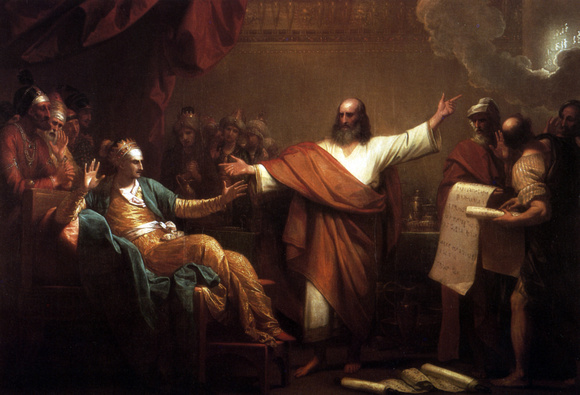
The queen mother of Babylon was present when King Belshazzar saw the writing on the wall (in a literal sense).  When the kings advisors could not read — much less interpret — the words, Daniel was consulted.  As I noted in a previous post, Daniel was direct and to the point, speaking truth to power.  Read Daniel 5 for the complete story.

Image

Daniel Interpreting to Belshazzar the Writing on the Wall, by Benjamin West

The world’s leaders will eventually look to the righteous.  That seems to be one moral of this story (the inevitability of divine judgment is the larger lesson).

But this seems out of touch with reality.  Today the righteous are mocked, despised, ignored, or even worse – seduced by power.  Daniel too was seen as irrelevant by this powerful emperor, but when Belshazzar faced a crisis and ran out of options, he turned to this marginalized prophet.  Daniel, unlike many religious lobbyists, despised power and spoke God’s truth.

It seems to me that today’s Christian political action groups have become little more than mouthpieces for a political party.  I see this with the Christian right and the Christian left, both falling in line with the Republican or Democratic platforms.  These Christian movements probably have good intentions, but political clout can easily distort one’s message.  Christian PAC’s, like any PAC, are highly susceptible to the corruption that comes with power.

Will the day come when powerful politicians notice righteousness and the wisdom that comes with it?  Will there be men and women who care more about the truth than power and prestige?  Are there any Daniels out there?

Posted in Uncategorized | 5 Comments

is it ever appropriate to be disrespectful?

Image

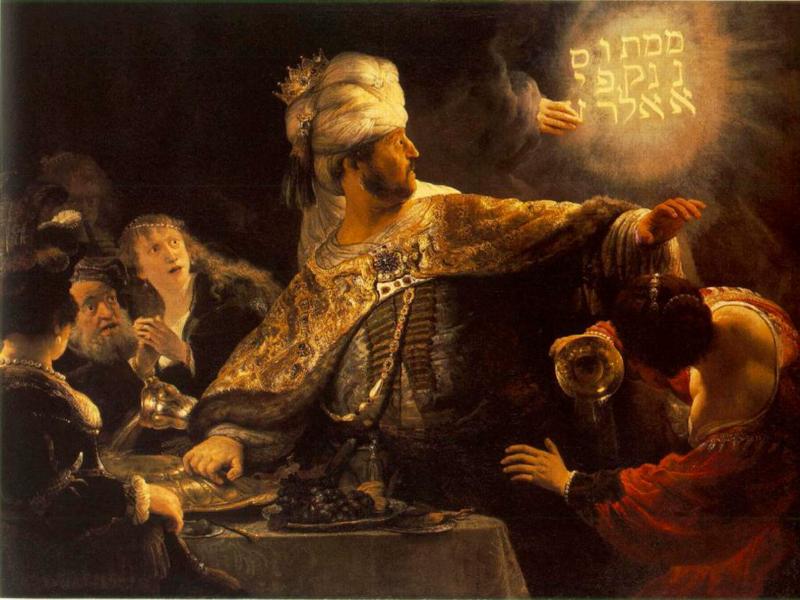
The Feast of Belshazzar, Rembrandt

“…Belshazzar…you have lifted up yourself against the Lord of heaven. And the vessels of his house have been brought in before you, and you and your lords, your wives, and your concubines have drunk wine from them..the God in whose hand is your breath, and whose are all your ways, you have not honored.”  (Daniel 5:22-23)

In chapter 4 we see Daniel as an example of showing compassion to our enemies, desiring repentance and forgiveness for king Nebuchadnezzar, even if his sin causes pain and harm to God’s people.  Here he seems more than happy (he definitely is less reluctant) to pronounce God’s judgment on a king. 

Is Daniel being less respectful to King Belshazzar than King Nebuchadnezzar?  If so, is this related to Belshazzar using the cups dedicated for the service of Yahweh for a toast to toast his own gods?  What does blasphemy look like today?  Is it ever appropriate to be disrespectful respectful to people? 

Posted in Uncategorized | 2 Comments

Should Religion and Politics Mix?

Image

Daniel Before Nebuchadnezzar, by Salomon Koninck

   “O Belteshazzar (Daniel), chief of the magicians, because I know that the spirit of the holy gods is in you and that no mystery is too difficult for you, tell me the visions of my dream that I saw and their interpretation….”  (Daniel 4:9 ESV)

It is amazing that a representative of a minority nation like Israel could have such political and religious influence on a powerful ruler like Nebuchadnezzar.  Daniel begs an important question for our own day: Should Christians avoid involvement in politics, rather than try to influence the State with Christian beliefs?  Or, in Thomas Jefferson’s words, does the First Amendment establish a “wall of separation between Church and State”? 

A blog post will not do justice to this argument, but in the spirit of Independence Day I will share some thoughts on this controversial matter.  

First, an all too brief historical background: Jefferson’s phrase comes from his letter to the Danbury Baptists, a persecuted minority who wanted to eliminate the official “state church,” not to establish one.  They simply wanted to protect their First Amendment right to a “free exercise of religion.” 

But does this mean a complete separation of Church and State, as interpreted by a 1947 Supreme Court decision (Everson v. Board of Education) ?  Does Jefferson’s wall, by limiting a religion’s ability to influence public life, violate rather than protect the free exercise of religion?  Should the State have the authority to define what religion is and how it should function in society?  When the State, quoting Jefferson’s wall, defines religion as a strictly private matter, does it exceed its Constitutional limitations? 

To be clear, this is not an endorsement of the Christian right or left — far from it.  There is a profound difference between serving Christ and serving the State, and it is very easy to drift towards the latter.  But the First Amendment, as I understand it, allows religious perspectives to compete in the public sphere, without government inhibition, on the same terms as other values.  Jefferson’s wall does not seem to allow this.


Posted in Uncategorized | 6 Comments

Where Did Daniel Go to Church?

Image

Jesus in the Synagogue, by James Tissot

If you believe religion is a private matter, then your answer might be something like, “He prayed, read the Torah at home, and maybe started a small group with Shadrach, Meshach, and Abednego.”  All good possibilities, but isn’t it also possible Daniel attended some sort of worship gathering?

Judaism was designed to be a national religion of a settled people.  They would have one center of worship, and a priesthood would be available for everyone.  The Babylonian captivity made this impossible.  The temple was in ruins and its site far away.  Sacrificial worship and religious festivals were impossible.  How would they worship?

The Jews were dominated by the Babylonians, and succeeding empires. They were forced to interact with new cultures and religions.  Often they were forced to worship other Gods, as we see in Daniel 3.  How could the Jews preserve their faith and resist incorporating other gods?

During the exile, a new form of worship developed in the absence of the Temple: the synagogue. There Jews could pray and receive instruction from the Torah.  Over time the synagogue became a permanent form of worship, even after the Jews returned to their homeland during the Persian empire.

The establishment of the synagogue was a movement to preserve a pure remnant of Israel, a people dedicated to God and His Law.  If there was one around in his day (which is entirely possible), it’s hard to imagine Daniel sleeping in on the Sabbath —  unless Nebuchadnezzar wouldn’t give him the morning off.

Aside from the history lesson, there is a two-fold moral here: 1) The worship of God is deeply personal, but never private. 2) Corporate worship is necessary to keep other gods out of our faith.

Posted in Uncategorized | 5 Comments

Does Daniel Remind You of Another Bible Character?

Image

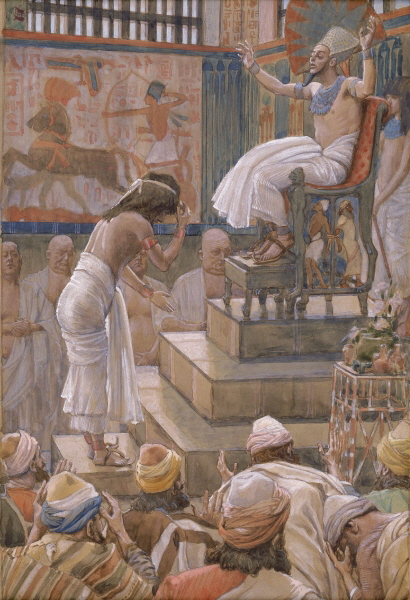
Joseph and His Brethren Welcomed by Pharaoh, by James Tissot

“I had a dream, and no one can interpret it. But I have heard it said of you that when you hear a dream you can interpret it.” (Genesis 41:15)

A holy man is held against his will in a hostile land, keeps his faith, loves God, and rises to power by interpreting dreams. Sound Familiar?  When you study Daniel you cannot help but notice the similarities between him and Joseph (Genesis 37-50). They were both taken from their homes at an early age; they were both taken to the king’s court; they both remained faithful to their God; they both encountered opposition; they both interpreted dreams; they both rose to a position of great power; neither had the opportunity to return to their home land.

Like Joseph, Daniel is about how God’s people are supposed to survive, and even prosper, in an alien land. It’s about how they keep their special identity when a society wants to erase it. And it’s about how God’s people must find strength in small groups.

I am already excited about chapter 3, the story of the fiery furnace. Don’t wait till Sunday — read ahead!

Posted in Uncategorized | 2 Comments

How Can We Make Credible Statements About God?

“For what can be known about God is plain to them, because God has shown it to them” (Romans 1:19).

Image

The Creation of Adam, from Michelangelo’s Sistine Chapel

According to much of the world, God (if he even exists) is distant and unknowable.  Human reason is the only reliable source of truth, therefore any truth claim of God must be explained away.  But Christians claim that God can and has revealed himself in 2 ways:

1) God’s “invisible attributes, namely, his eternal power and divine nature, have been clearly perceived, ever since the creation of the world,in the things that have been made” (Romans 1:20).  Therefore, no one has an excuse for not knowing God.  This is often referred to as “natural” or “general” revelation. According to Romans 1, we can know certain things about God by observing the created order.

2) God has revealed himself perfectly in Jesus.  God has graciously chosen to reveal himself in human history.  He revealed himself in the lives of the patriarchs, in the establishing of his people Israel, and ultimately in the person of Jesus Christ.  When Jesus’ disciples asked him to show them the Father, he replied, “Whoever has seen me has seen the Father” (John 14:9).  Jesus is the Word made flesh (John 1:14-18), and “in him all the fullness of God was pleased to dwell.”  In other words, if someone wants to know God, look at Jesus.  If an unbelieving world wants to see what God is like in Christ, they should be able to look at Christians, or ‘little Christs’ (Acts 11:26).

With this in mind, how can the Church make credible statements about God?

Posted in Uncategorized | 6 Comments

Should Christians Be Snake Charmers?

“…they will pick up serpents with their hands” (Mark 16:18). 

After all, it is in the Bible.  Some congregations, following the commands of Christ, have incorporated snake handling into their worship services.  Is it possible that Jesus instituted this practice like He did the Last Supper?  If so, we can’t ignore it, no matter bizarre it seems to us.  Rather than dismiss this passage, let’s use it as an opportunity to strengthen our Bible study skills.  There are 2 things to consider here: Image

1) Did Jesus really command this? One does not need to be a scholar to see that this really doesn’t look like an actual command.  Also, if you consulted a concordance, a commentary or a study Bible, you would probably find a cross reference to Acts 28:1-6, where the Apostle Paul was bitten by a serpent but suffered no ill effects.  Based on our studies, we might understand Jesus’ words as a prediction, and not a command for all churches to follow.

2)  Does this even belong in the Bible in the first place?  This sounds like heresy, but it is actually doing textual criticism.  Textual criticism sounds complex — and it often is — but is not limited to pastors and scholars.  Unless you have a King James Bible, you will see a footnote after verse 8 that says something like this:

Some of the earliest manuscripts do not include 16:9–20.

Bible translators must look at all of the manuscript evidence, and discern what best reflects the authors’ original writings.  You can see some of this in the footnotes of most modern Bible translations.  You can also read about it in most study Bibles and commentaries.  So, based on textual criticism, verses 8-20 are not found in the oldest New Testament manuscripts.  They were written at a later time by someone besides Mark.  You might wonder if these verses should be considered Sacred Scripture (a separate debate). 

As Christians it is our obligation to understand and apply the Word of God.  I believe we sometimes fail in this, not because it is too hard, but because it requires discipline and work.  As your pastor and brother in Christ, I encourage you to dwell in the Word, so you can take on the mind of Christ.

And please, lay off the snakes.

Posted in Uncategorized | 4 Comments

The Other Sacrifice

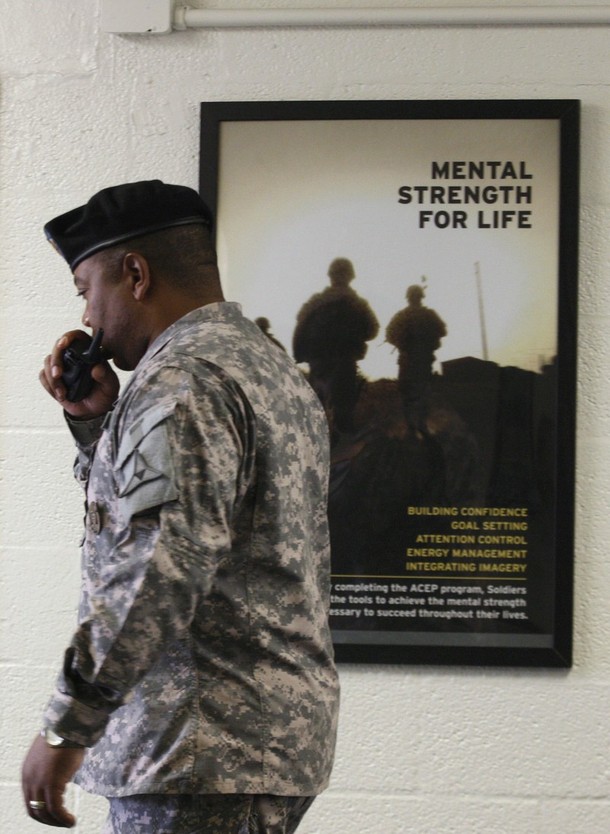
This weekend we honor those serving in our military, and the word ‘sacrifice’ will be used frequently.  We talk about the sacrifices that families of military personnel make, and we talk about those who paid the ultimate sacrifice, giving their lives in service to their country.

But there is another sacrifice we should remember. Image

Veterans Affairs Secretary Eric K. Shinseki recently announced they were adding 1,900 mental health nurses, psychiatrists, psychologists, and social workers to its existing workforce of 20,590 mental health staff.  This is a response to the growing epidemic of suicides among combat veterans.

The past decade has seen an unprecedented use of combat personnel, and the resulting stress of multiple deployments causes military suicides to increase dramatically, both among active duty and retired service members. In fact, military deaths from suicide outnumber combat deaths. According to an article in the Air Force Times, suicides among airmen are up 40 percent over last year. 

Today, let us also remember those who have sacrificed their sanity in the performance of their combat duty.

Posted in Uncategorized | 2 Comments

Why aren’t the Men in Church?

My experience as a pastor and a parishioner tells me that women tend to be more active in the church than men. Certainly there are exceptions, but usually women vastly outnumber the men in their congregations. Why is this?

Image

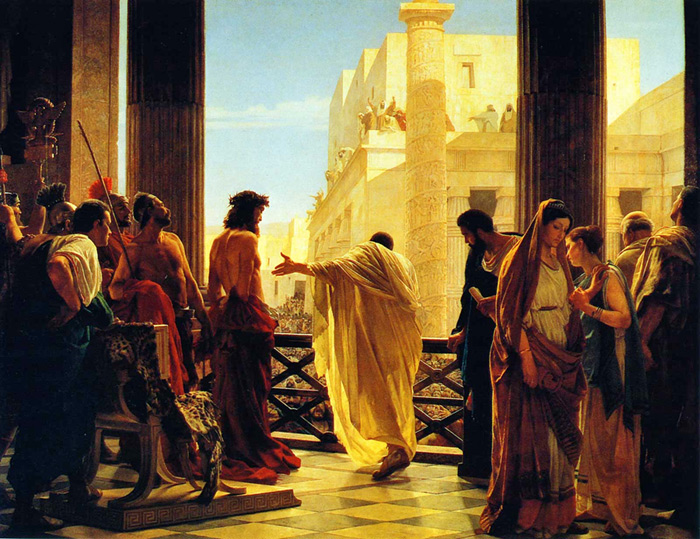
Ecce Homo (Behold, the Man), by Antonio Ciseri

Men, like women, can have valid reasons for limiting their worship attendance: work schedules, medical problems, caring for an again parent…the list could go on.

But there might be another reason: One explanation for men’s absence in the church might be that men often think that Christianity automatically means the surrender of masculinity. This is the opinion of men like Friederich Nietzsche, an influential atheist philosopher of the late 1800’s.  He adopted the unbiblical view that Christianity was a religion for the weak. Our culture’s embrace of the “self-made” man has caused many to see self-reliance as the highest good, a message that is the opposite of the gospel. These views of masculinity are false, but they are widely accepted.  The popularity of these ideas can mean that many men view Christianity and manhood as irreconcilable.

Jesus was certainly not timid (Matt. 23), nor was He naïve or feminine. Instead, He willingly went to the cross because of His strength of purpose. Jesus is the ultimate man, the second Adam who fully exhibits all that God wants men to be (1 Cor. 15:45). Men find true manhood only in serving the perfect man, Jesus Christ.

True manliness is Christlikeness.

Posted in Uncategorized | 5 Comments