Narnia and Middle Earth: The Movie

Image

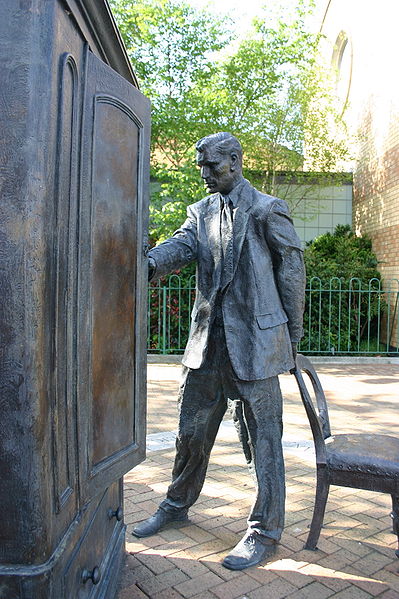
C. S. Lewis entering the wardrobe from The Lion, the Witch and the Wardrobe, in East Belfast, Northern Ireland

You have probably heard the name C.S. Lewis, the author of the Chronicles of Narnia book series and the inspiration behind the movie sequel.  The Screwtape Letters and The Space Trilogy are also good fiction reads.  But there is more to Lewis than his fiction.

After 20 years of atheism, Lewis returned to his Christian roots and became a great defender of the faith.  He wrote Mere Christianity, Miracles and the Problem with Pain to answer the skeptics’ criticisms of Christianity.  I highly recommend picking up some C.S. Lewis non-fiction – you can never have too much in your library.

You may not know that C.S. Lewis was good friends with J.R.R. Tolkien, the author of the Lord of the Rings trilogy.  In fact, Lewis says Tolkien, who taught with Lewis at Oxford, was influential in his coming to faith. According to Lewis, he converted to Christianity after a late night conversation with Tolkien and another colleague.

A movie is in the making which describes their friendship to commemorate the 50th anniversary of Lewis’ death.  The film, The Lion Awakes, is due to be released in 2013 – click here to see the concept trailer.

Posted in Uncategorized | 5 Comments

Is God Close-minded? (part 3)

If God really loves the world, why did He provide only one way to redeem it?  

I believe God is perfect love and justice, therefore I believe God will show love and justice to all people, regardless of their beliefs.  As the prophet Isaiah says, “…the Lord is a God of justice (Isaiah 30:18 ESV).”

Image

Thomas Jefferson
Artist: Rembrandt Peale

Thomas Jefferson literally cut out what he didn’t like in Scripture, so his Bible reflects his own biases.  This is a real temptation for us whenever we read parts of the Bible that make us uncomfortable.  Instead, Christians should remember two biblical teachings: 1) God is patient with us, “not wishing that any should perish, but that all should reach repentance (2Peter3:9).  2) Outside of Jesus Christ, the Word made flesh, “there is no other name under heaven given among men by which we must be saved.” (Acts 4:12).

Christianity teaches that God took on human flesh to redeem sinful humankind.  God offers eternal life to those who trust in the person and work of Christ.  Is God closed-minded for providing only one way to salvation?  Your answer depends on how you answer these two questions: 1) Do you believe God is righteous and holy?  2) Do you believe that humankind, God’s highest creation, has rejected God and His laws? 

If your answer to these questions is ‘yes,’ then perhaps we should be asking, in amazement and gratitude, a different question: “Why is there any way at all?”

Posted in Uncategorized | 4 Comments

Should Christians Try to Convert Others? (part two)

I don’t see anything wrong with Christians trying to convert other people. There is, of course, Christ’s command to preach the Gospel to the ends of the earth.  But I think there is more we can say:

Image

The Samaritan woman at the well
Artist: Giacomo Franceschini

If you think that someone has harmful ideas (physically and spiritually), doesn’t it make sense to try to change their mind?  In fact, wouldn’t this be considered an act of love?

Sure, everyone has a right to their own beliefs, and we should always show love, respect and hospitality to all people, regardless of their faith (or lack thereof).  After all, shouldn’t Christians want a tolerant and just society for our Jewish, Muslim and atheist neighbors? 

And we should never manipulate someone else into changing their beliefs.  Hyper-emotional appeals at revivals come to mind here.  True love never manipulates, and Truth has its own ability to convict and persuade.  But does this mean we can’t conclude that someone’s beliefs are false and try to persuade them of the Truth?

Such talk of truth will make many in a postmodern world uncomfortable.  But Christians follow Jesus not because of a belief in universal human goodness or the commonality of our faiths.  We love God — thus we love our neighbors — because He first loved us (1 John 4:19).

Posted in Uncategorized | 6 Comments

Did Jesus Teach the Only True Faith? (part one)

Image

Title: The Adoration of the Magi
Artist: Joseph Christian Leyendecker

That is what Jesus seemed to be saying, which is disturbing in our pluralistic society — even for many  Christians.  Many believe instead that all religions are like paths on a mountain — they all eventually lead to the same place.  I must be honest here — when I see the intolerance, hatred and bigotry of religious groups towards one another, I wish this were true.   

Here are two problems I see with pluralism:

1.  Almost all religions (Bahai might be an exception) do not teach that they all have the same destination — in fact, they reject this.  They have some things in common (fatherhood of God, brotherhood of man, etc.), but there are irreconcilable differences.  For example, some believe there is one God (Christianity, Islam), others believe there are more than one (Hinduism, Wicca).  Can all these paths lead to the same destination?  

2. Some belief systems are evil. Most would agree radical Islam is wrong.  And let’s remember that Christianity has, at certain points in history, produced its own radical forms.  Other religions have taught mass suicide and marital infidelity.  Can we say that these paths lead to the same mountaintop?  

If the above arguments are true, does this mean Christians should reject everything about other religions?  What positive lessons can we learn from other religions?

Posted in Uncategorized | 17 Comments

Maximizing the Blogging Experience

First of all I want to thank everyone for making this blog a good one, both through your viewing and your lively interaction.  While a blog doesn’t provide the level of intimacy as a small group, it does help us learn from one another during the week.  There are different levels of ‘internet literacy,’ so I want to make you aware of a few features:

The first one is hyperlinking: You may notice certain words that are blue (as compared to the usual black.  If you click on one of these, it will direct you to another website.  I hyperlink Scripture references, words that might be unfamiliar, or articles that will provide additional information, such as a scripture text or an article.

The second one is the sharing buttons, which you can see at the bottom of each post.  If you are Facebook users, you are probably familiar with this.  Clicking the like button will enable your Facebook friends to see what you’ve been reading, and will publicize the blog.  You can also share a particular post by emailing it to someone.  There is also a sharing feature for those with Twitter accounts.

The third one (which is not really new) is Goodreads, which shows the books I am currently reading.  This can be found on the right hand column. 

Lastly, also on the right hand column just under Goodreads you will see a row of icons (a folder, tag, clock, star and conversation bubble).  Click on these and you will see the different ways that WordPress can help you find past blog posts. 

I am approaching this blog as a ministry tool – something to challenge us to take on the mind of Christ.  To that end, let me end with an important observation.  When I follow other blogs, I see that such ministry tools come with a potential downside: Written words do not convey tone or mood, and can easily be misunderstood.  As we each share our opinions, let us do so with the intention of building up one another, and encouraging one another in our walk with Christ .

Have a blessed week.

Posted in Uncategorized | Leave a comment

Ten Commandments on Government Property?

There are so many lawsuits and appeals related to the display of anything religious (Ten Commandments monuments, crosses, nativity scenes) on public property.  An incredible amount of time, energy and money are spent on these legal battles.   Should this matter at all to Christians?

Image

Moses with the Ten Commandments
Artist: Rembrandt

I fail to see the victory that will be won in keeping the Ten Commandments on courthouse lawns. 

I wonder if monuments and nativity scenes on government property are like the broad phylacteries and long fringes that Jesus condemned (Matthew 23:5).  Could they be empty symbols that give us false confidence in our righteousness — personal and national?  Maybe we should reconsider that second commandment on the monument:  “Thou shalt not make any graven image” (Exodus 20:4).

There is an important difference between Christianity and patriotism. God does not require national endorsement (and refuses to endorse presidential candidates, I’m sure).  Christ is not dependent upon Caesar to proclaim his kingdom.  I just don’t believe God is that concerned with granite monuments.  

Instead, I believe the apostle Paul expresses God’s greater concern: “…you show that you are a letter from Christ delivered by us, written not with ink but with the Spirit of the living God, not on tablets of stone but on tablets of human hearts” (2 Corinthians 3:3).

Posted in Uncategorized | 14 Comments

Is the Resurrection Mysterious?

Image

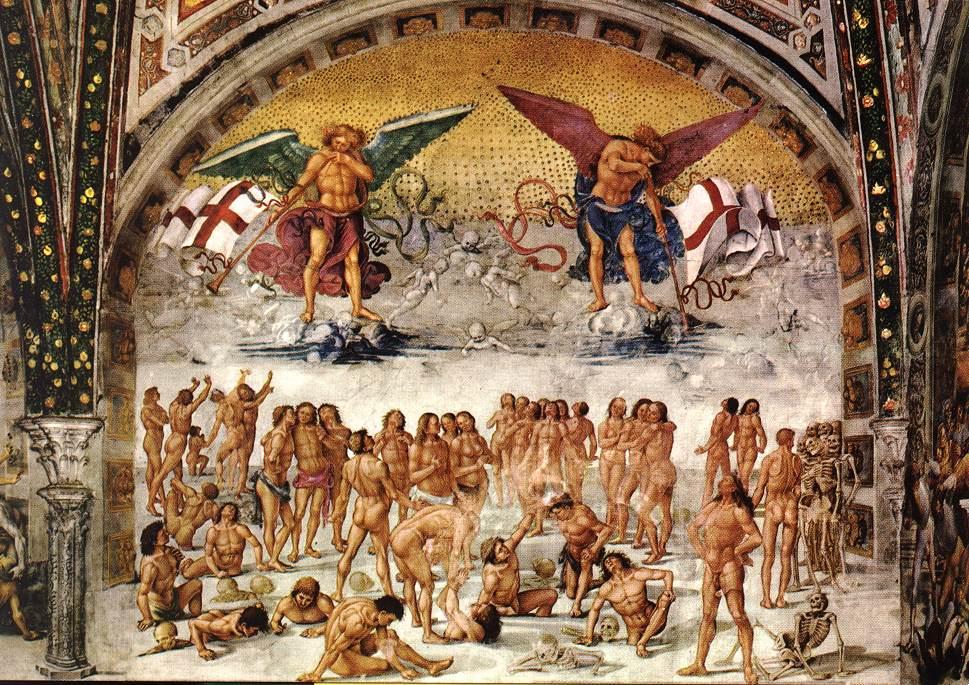
Resurrection of the Flesh
Artist: Luca Signorelli

The resurrection of Jesus secures our salvation, but it is also connected to something else: Jesus’ resurrection is “the firstfruits of those who have fallen asleep” (1 Corinthians 15:20).  The Apostle Paul uses an agricultural metaphor to describe our future resurrection.

The first crops that farmers gather from a harvest are a sure sign of the full harvest to come. Obviously, the full harvest is more abundant, but the firstfruits are not radically different than the harvest to come.  If tomatoes are the firstfruits, there will be a full harvest of tomatoes, not corn. In describing Jesus’ resurrection as firstfruits (1 Cor. 15:20, 23), Paul tells us about our own future resurrection. Like Jesus, each of us will have a resurrected physical body. Like Jesus, each of us will possess this body forever.  Both the firstfruits and the final harvest are physical, bodily resurrections.

There are many mysteries to our faith.  But when I think about gardening, the future resurrection of the dead doesn’t seem to be quite as mysterious.

Posted in Uncategorized | 4 Comments

Should Pastors Have Guaranteed Jobs?

Should Pastors Have Guaranteed Jobs?

Many United Methodists are concerned about General Conference’s decision to end guaranteed appointments for pastors.  It will create certain challenges for bishops, but overall I support the policy change:  Fewer churches are able to support full-time pastors, and a guaranteed job can make pastors complacent.  And really, how many in our congregations have guaranteed jobs?

I believe a lesson from early American history is in order here. Back in the colonial days, some states funded certain denominations.  The Episcopal Church was funded by Virginia.  The Congregationalist Church was funded by Massachusetts.  Their pastors had good job security.  The Methodist pastors in early America did not have guaranteed jobs.  If pastors wanted to feed their families, they had to grow their congregations or work a second job (usually both).  The non-state supported churches grew and expanded, while the state supported churches declined.

Sure, this isn’t 1609, but maybe this is a blessing in disguise.

Posted in Uncategorized | 3 Comments

Is God a Child Abuser?

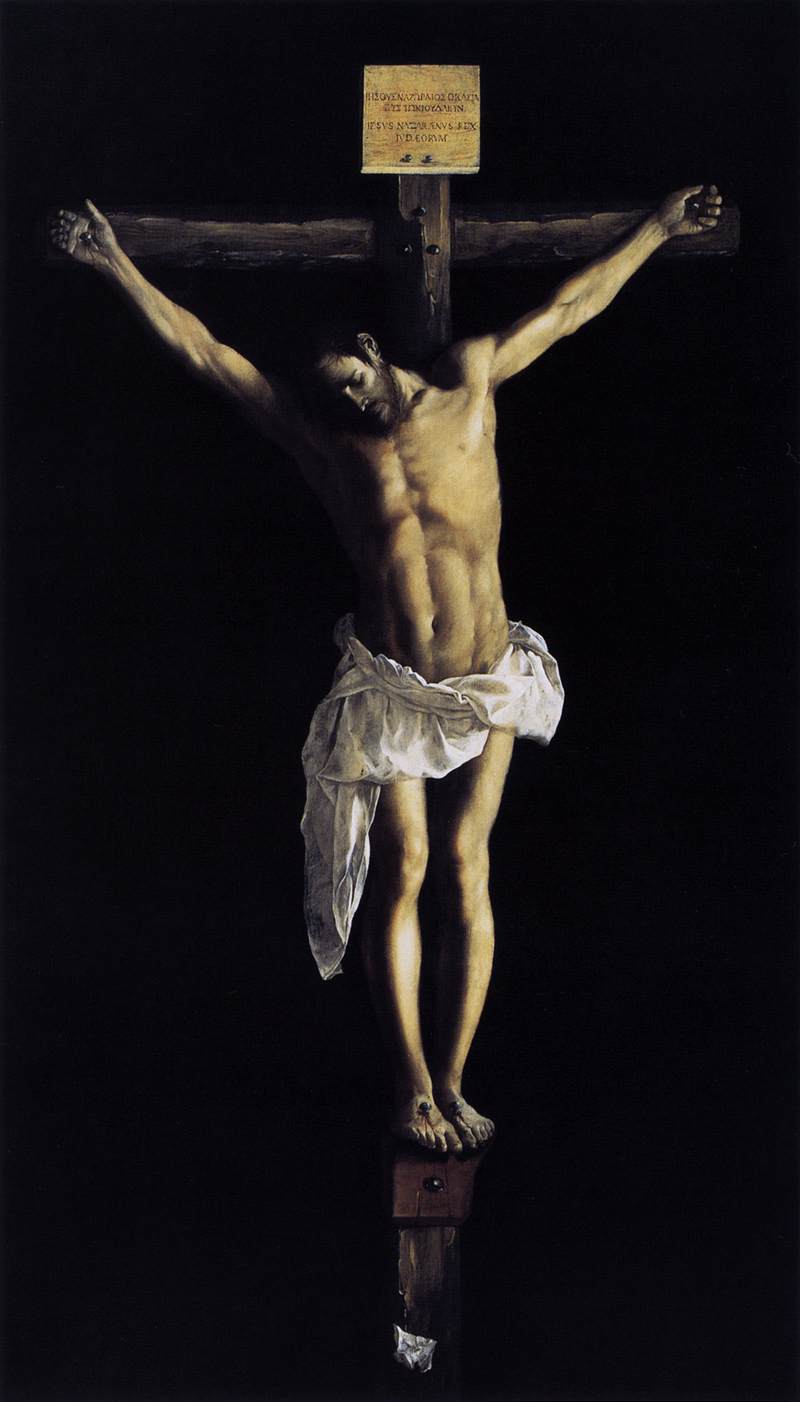
The Bible teaches that Christ died as a substitute for sinners. God transferred our guilt to Christ, and he bore our punishment (Isaiah 53:6). This satisfied both the wrath and the righteousness of God (Romans 3:23-25), so that He could forgive sin without compromising His holiness. Theologians call this Penal Substitution, and this is what I taught on Sunday.

Image

Christ on the Cross
Francisco de Zurbarán

Some Christians (and skeptics) claim this is divine child abuse. God is a cruel father unjustly punishing his son for an offense he has not even committed. Such critics have replaced this view of the atonement with another called Christus Victor. The idea is this: Christ in his death and resurrection defeated the devil, sin, and death. This is also biblical (see Hebrews 2:14-14).

The above criticism has a good point: The picture of God having his anger appeased by the death of his innocent Son is a barrier to faith for some people. But the criticism is partly wrong: it assumes God the Father and God the Son have different concerns. It assumes the Father is only concerned with righteousness, and the Son is only concerned with compassion. If that were true, it sounds like the Son saves us from His angry Father! But while we were sinners, God, not just the Son is determined to reconcile with us (2 Corinthians 5:19). God does not stand in another room, waiting for Christ’s work to be completed before he’ll have anything to do with us.

I like both Penal Substitution and Christus Victor explanations of Christ’s death. The first view reminds us that when He wanted to demonstrate His love for us, God substituted himself for us on the cross. God is both just and merciful (Romans 3:24-26). I like the second one because it reminds us that we (and all of creation) were slaves to sin, but are now free through Christ’s victory on the cross.

Posted in Uncategorized | Tagged , , | 3 Comments

Was Jesus Kidnapped?

What exactly did Christ’s death accomplish? 

Image

William Blake
Satan Smiting Job with Sore Boils

Throughout church history, several different explanations have been offered, some better than others. The ransom theory of the atonement of Jesus is the teaching that the death of Christ on the cross was a ransom paid to Satan. In Mark 10:45, Jesus said, “For even the Son of Man came not to be served but to serve, and to give his life as a ransom for many”(ESV). 

This theory was developed around 200 A.D. and claims that Satan held people captive as a victor in war. Since sin is spiritual bondage to Satan, a ransom had to be paid to set them free.  Does this give Satan too important a role in the work of redemption?  If this explanation is correct, wouldn’t this make Satan one of the primary benefactors in the work of salvation?

Jesus did see his death as a ransom for many, but to whom was this ransom owed?  I look forward to talking more about this on Sunday. 

Posted in Uncategorized | 12 Comments