How to Prolong Christmas

Christmas should have long lasting effects, but often it comes in the form of debt. Every year I read about how people will be paying off Christmas debt for the months leading up to the next Christmas, and then the cycle restarts.  (Interestingly, I found most of these stories come from U.K. news outlets –  American writers seem more concerned with finding the best credit cards for paying off Christmas debt. Chrsitmas-Carol
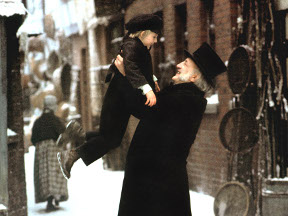
Rather than using the monthly billing statements as a reminder of that Christmas spirit, I suggest that you keep playing those Christmas carols, reread the Gospel of Luke’s account of the Christmas story, and watch George C. Scott play Ebenezer Scrooge in A Christmas Carol.  These are timeless, not seasonal messages.  Or, if you want something a little different, I recommend Edward Hermann’s telling of Henry Wadsworth Longfellow’s Christmas, or the story behind I Heard the Bells on Christmas Day. Christmas day, for Longfellow, provides an important perspective on grief. 

As we enter the new year, I offer the immortal words of Ebenezer Scrooge, the crabby old miser who became an incurable Christmas enthusiast overnight:

“I will honour Christmas in my heart, and try to keep it all the year. I will live in the Past, the Present, and the Future. The Spirits of all Three shall strive within me. I will not shut out the lessons that they teach!”

Posted in Uncategorized | 2 Comments

Joseph the Greedy Opportunist?

“You’ve saved our lives. If you wish, we will be Pharaoh’s slaves.” – Genesis 47:25

The story of Joseph is truly a remarkable one.  He’s sold into slavery by his brothers, falsely accused and unjustly imprisoned, only to become the second most powerful man in Egypt. It is also a moving story of forgiveness and God’s redemptive purposes, despite the actions of evil men.

And then there is the rest of the story.

Image

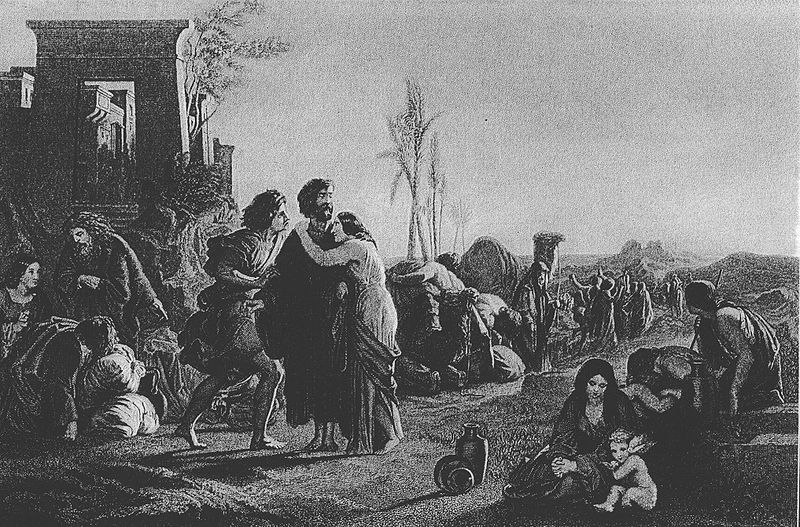
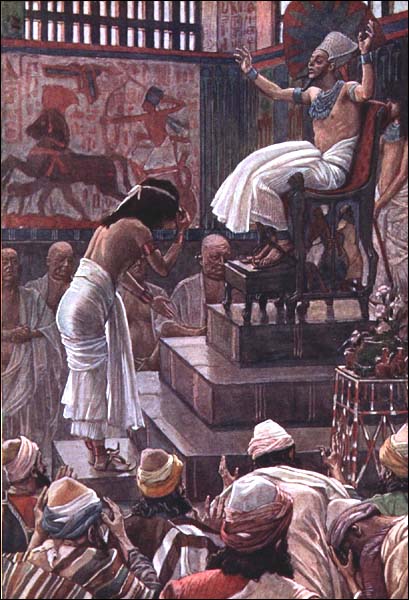
Joseph Before Pharaoh, James Tissot

Joseph’s family survives a 7 year famine, and so does Egypt.  But Genesis 47 would not have us see Joseph as a benevolent savior, and we would be outraged if the Red Cross or the Salvation Army followed Joseph’s blueprint for hunger relief.

Instead, Joseph comes across looking like a greedy opportunist:

  • Egypt sells grain to desperate people facing starvation – this is not a relief effort.  Egypt has cornered the market on grain, so can sell it for whatever price they want.
  • When the money dries up, Egypt accepts livestock for payment, further diminishing private property.
  • As the famine persists, Egyptians are forced to purchase grain with their land.  Egypt gives them seed to plant after the famine, and Pharaoh would get 1/5th of whatever they grew on his lands. That’s a high taxation rate in any society.

The result of Joseph’s policies: The Israelites were tax exempt and kept their lands. Egyptians were now serfs, and Pharaoh was Lord of the Manor. Hardly what we would call a just society.

While the Joseph story is inspiring, there is a lesson we often miss. Genesis 47 is an ancient example of how powerful governments can seek more power during times of crisis.

Posted in Uncategorized | Tagged , , , , , , , | 1 Comment

Where do we get Altar Calls?

Every Sunday my childhood pastor would invite people to come forward, make a decision, repent, seek forgiveness, while the congregation sang a few rounds of Just as I Am. Many evangelical churches do the same thing.

The Bible calls sinners to repentance and faith in Christ, but does not mention altar calls.  Famous evangelists like Jonathan Edwards and John Wesley never gave an altar call. By 1805 some American pastors urged sinners to come to the altar – a fenced-in area where they preached –  to seek salvation. This was a visible way to measure people’s response to the message.  Image

A Presbyterian pastor Charles Finney made the altar call popular. He believed that sin was “a voluntary attitude of the mind,” not a nature one was born with, so people must be persuaded to repent and trust Christ. Finney, believed preachers could produce revival using the right methods, and the altar call was an effective method to change people’s minds.

Other pastors disagreed. They believed people were born with a sinful nature and couldn’t trust in Christ until God changed their hearts. Iain Murray, a church historian, says that some preachers opposed the altar call because it “confused an outward act with an inward spiritual change,” and gave people false assurance of their salvation.

The altar call is here to stay, but so are the questions. Should churches use altar calls, even though they are not mentioned in the Bible? Do they confuse an outward act with an inward change? Do they give professing Christians false assurance? One way to answer these questions is to look at the long term results.

Posted in Uncategorized | Tagged , , , | 5 Comments

Should There Be Atheist Military Chaplains?

Jason Heap raised this intriguing question when he submitted his application to become a Navy chaplain. The words atheist and chaplain seem to be contradictory, since chaplains provide for the spiritual needs of the military.  They officiate religious services and provide pastoral care. How could an atheist do that? 

Image

There are a growing number of atheists/agnostics in America, including military men and women. Don’t they also need care?  Shouldn’t there be chaplains to meet the needs of this growing demographic?

Atheists, like Christians, should not be crammed into one box.  There are atheists whose mission is to disparage and destroy religion, and would not be the best caregivers.  But there are also atheists whose mission is to teach the value and goodness of the human being, without using religion to do so.  While there are irreconcilable differences between Christian and secular humanism, there are also points of agreement between them. 

To turn this argument on its head, is the chaplain required to share the spiritual beliefs of soldiers and military personnel? Chaplains are required to work in an interfaith (not just interdenominational) context.  Humanism is not completely faithless – but their faith lies in the dignity and goodness of humanity, not in a deity.  

While I’m sympathetic with some of atheism’s criticisms of religion, I find the denial the existence of a creator a logical absurdity.  It’s fatal flaw is it’s failure to account for the origins of the universe.  Atheism, in other words, requires a bigger leap of faith than theism. 

At the end of the day, if I’m critically injured I won’t refuse a humanist chaplain. We disagree on the source of my worth, but if they affirm humanity’s value just as much as I do, I’ll welcome their care and support. 

Posted in Uncategorized | Tagged , , , , , , | 7 Comments

Should Adultery Be Outlawed?

The governor of Colorado signed into law a bill to repeal a state law that criminalized  — but included no penalty for — adultery.  The bill passed the full House by a vote of 37-26, and passed the full Senate by a vote of 23-10. The bill takes effect on August 7.

Democratic Rep. Daniel Kagan, speaking in support of the bill, said  “Adultery is a matter between a spouse and his conscience and his God, but not his local sheriff.”  Image

Colorado Family Action says that repealing the adultery law will lead to “the disruptions of families, promotion of prostitution and unwed pregnancies.” Dr. Albert Mohler, the president of the Southern Baptist Theological Seminary, opposes the repeal.  He says the law serves as “a reminder of the public nature of marriage and the societal threat of adultery.”

For Christians and others who take seriously the Judeo-Christian ethic  “Thou shalt not commit adultery,” is this terrible news? Consider the following:  

Are laws about making statements, or punishing crimes?  A law without a penalty, it would seem, is not really a law. 

Even if the law did have a penalty, does it make sense to criminalize an activity that voluntarily takes place behind closed doors?  Perhaps Mohler wouldn’t object to having cameras installed in his home, just to make the law enforceable. 

Is adultery a violation of another person’s rights, freedom or property?  Isn’t adultery, as the Apostle Paul said, a sin “against their own body (1 Cor.6:18)?”  If so, should the state enforce a sin against a person’s own body?

Should Christians look to the state to enforce their own morality? At the risk of sounding unpatriotic, hasn’t the state been, at times, guilty of the greatest examples of immoral acts, such as killing and stealing?  If so, why would Christians look to the state to enforce their moral code? 

While he strongly condemned sexual immorality, the apostle Paul discouraged the Corinthian church from going to the state to enforce their moral code.  He considered the state, “whose way of life is scorned in the church, (1Cor.6:4)” incompetent to judge such matters.   He goes on to ask the church, “Is it possible that there is nobody among you wise enough to judge a dispute between believers? (6:5)”

Christians who are quick to criticize Islamic countries for prescribing and proscribing all manner of behavior are very inconsistent when they support the same thing here.

Posted in Uncategorized | Tagged , , , , , | 3 Comments

What Should Christians Know About Islam?

In my last blog post I argued that one does not need to study other religious texts in order to establish credibility for their own faith.  Now I’m asking if we should know anything about other religions, in this case Islam, whose presence in the world often evokes fear and anger. 

Many Americans have criticized Islam for their irrational hatred, intolerance, and disregard for freedom.  Ironically, when a group decided to build a mosque in Murfreesboro, Tennessee, some of the citizens responded with their own raw emotion, intolerance, and disregard for property rights. Image

While there are reasons to be concerned with radical expressions of Islam, the Murfreesboro incident appears to be an example of painting an entire group of people with the same brush. So, how can one better educate themselves about Islam, without delving into a study of the Quran?  

I will make two book recommendations: 1) Adam Hamilton’s Christianity and World Religions provides a fair-minded, easy to read overview of Islam and other world religions.  2) Gerald McDermott’s  Can Evangelicals Learn from World Religions? is also a helpful read. 

While there are irreconcilable differences between Islam and Christianity, Christians should try to become familiar with at least the basic tenets of Islam and other religions.  That way they can make informed statements about other religions, have intelligible conversations with people of other faiths, and avoid situations like the pooling of ignorance that took place in Murfreesboro. 

Posted in Uncategorized | Tagged , , , , , , , | 1 Comment

Should Christians Ever Read the Quran?

“…as even some of your own poets have said, ‘For we are indeed his offspring’.” – Acts 17:28

Image

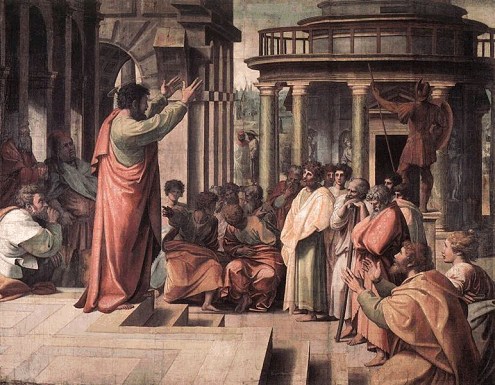
Paul in Athens, by Raphael

There is a contemporary praise song with these words that the Apostle Paul spoke to the Athenians during his second missionary journey.  Surprisingly, Paul is not quoting the words of Jesus or from the Old Testament, but from a Greek poem about Zeus, the father of Greek gods.

I think it’s fair to say that Paul was familiar with Greek literature, and what they believed about God.  So, does this mean we should do the same?  Should we, for example, study the Quran in order to better witness to the Muslim?

The answer would depend on a few things.  Are you having a serious conversation with a devout Muslim?  Is this person willing to read your Bible (rather than just trying to convert you)?  Do you have the time, the motivation and the ability to read portions of the Quran?

If the answer to all of these is yes, then I would say be careful, but give it a try.  Read a few passages, assign a few Bible passages to your Muslim friend, and discuss it.  When we show interest in someone else’s beliefs they are more likely to listen to ours.

If the answer to any of these is no, then I would strongly advise against picking up a copy of the Quran.  All Christians are called to share the Gospel with everyone, including Muslims.  Not everyone is called to engage Muslims at this level.  In this case, trying to do this will not make you a more credible witness.  In fact, this could harm your witness and your soul.

(Next Post: What Must We Know About Islam?)

Posted in Uncategorized | Tagged , , , , , , , , , | 4 Comments

Should Christian Athletes be Considered Role Models?

“And you yourself must be an example to them by doing good works of every kind.” – Titus 2:7

This debate goes back to the 1990’s when Charles Barkley was criticized for his behavior on and off the court.  People reminded him that he was a role model for teenagers and children.  He responded to this in a Nike commercial, where he reminded parents, “I’m not paid to be a role model. I’m paid to wreak havoc on the basketball court.  Parents are role models.  Just because I can dunk a basketball, doesn’t mean I should raise your kids.”

These athletes may not have a choice. Image

Professional athletes have a power of influence on adoring fans, especially among those who have few role models in their lives.  We can say that parents are the main role models in a child’s life, but this assumes they have caring parents to do the job.

Still, it’s hard to imagine even the most loyal football fan wanting to be just like Ray Lewis someday, and have 6 children with 4 different women.

What about Christian athletes?

Whenever Christians become popular athletes, some Christians unfairly put them on a pedestal and make them role models for discipleship.  Many Christians have rejoiced that Ray Lewis and Colin Kaepernick represent the Christian faith on the biggest show of the year.  And of course there’s Tim Tebow.

The Christian athlete, like any Christian, should be an example of grace. Like the rest of the world they can be weak, selfish, and prideful people.  They face the same temptations we do, but they also face the temptation of pride and self-glorification even more than we do.

Rather than encouraging our youth to see Christian athletes as role models, maybe the church (as well as Christian professional athletes) should instead be encouraging our youth to look at people like the tax collector in Luke 18, who “would not even look up to heaven, but beat his breast and said, ‘God, have mercy on me, a sinner.’

Posted in Uncategorized | Tagged , , , | 5 Comments

Is Charging Interest a Sin?

LORD, who may dwell in your sanctuary?…[he] who lends his money without usury… Psalm 15

This may be an oversimplification, but there seems to be two basic kinds of debt: The kind that comes from overspending, and the kind that oppresses the poor and vulnerable.

Image

The Year of Jubilee, by Henry Le Jeune

So many Americans are slaves to debt.  Many of them are still paying off Christmas debt, in addition to making monthly payments on cars, furniture and televisions at exorbitant interest rates.  It is easy to get caught up in trying to store up treasures on earth, rather than storing them up in heaven. (Matthew 6:19-21)

Those carrying the burden of debt – whether it be from overspending or from necessary expenses –  should consult authors like David Ramsey, who teaches debt free living, and he does so from a Christian perspective. 

There is the other kind of debt, the kind where the poor with few alternatives are offered high-interest loans.  The recently unemployed paying interest on back payments for rent.  A low-income family paying interest on mounting medical bills.  A single mom using credit cards to keep the electricity on or put food on the table.  Charging interest is nothing new, and the God of ancient Israel had a different society in mind:

If you lend money to one of my people among you who is needy, do not be like a moneylender; charge him no interest. Exodus 22:25

If one of your countrymen becomes poor and is unable to support himself among you, help him as you would an alien or a temporary resident, so he can continue to live among you.  Do not take interest of any kind from him, but fear your God, so that your countryman may continue to live among you. You must not lend him money at interest or sell him food at a profit.  (Leviticus 25:35-36)

Not only did God prohibit charging interest, God also commanded the cancellation of debts:

“At the end of every seven years you must cancel debts.  This is how it is to be done: Every creditor shall cancel any loan they have made to a fellow Israelite. They shall not require payment from anyone among their own people, because the Lord’s time for canceling debts has been proclaimed.”  Deuteronomy 15:1-2

All of this is not to be confused with ‘handouts’ to the lazy and unmotivated (see 2 Thessalonians 3:10).  The subject of charging interest and forgiving loans was a part of God’s bigger vision for the world:

“…there need be no poor people among you, for in the land the Lord your God is giving you to possess as your inheritance, he will richly bless you, if only you fully obey the Lord your God and are careful to follow all these commands I am giving you today.” (Deuteronomy 15:4-5) 

If only big banks and big businesses had a similar vision.

Posted in Uncategorized | Tagged , , , , , , , , , | Leave a comment

Beating the Post-Christmas Blues

“Where is he who has been born king of the Jews? For we saw his star when it rose and have come to worship him.” – Matthew 2:2

Image

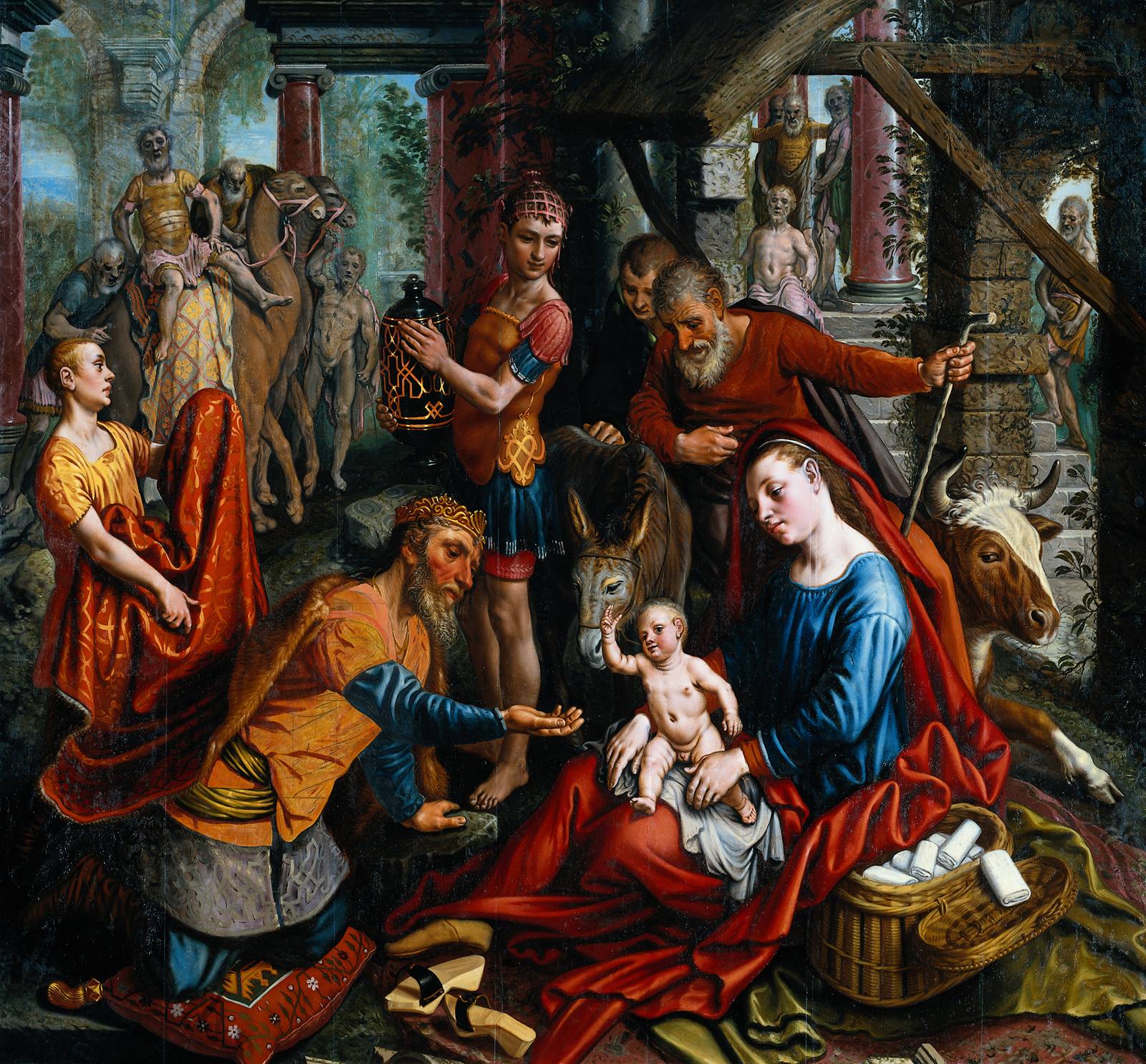
The Adoration of the Magi, Pieter Aertsen

Many experience what has been described as post-Christmas depression.  For such persons, once December 25th turns to December 26th it may feel like everything fun and exciting is gone, leaving behind disappointment, depression and debt.

While December 25 begins the end of Christmas at the mall, it’s not over so quickly in the Church.  Christmas actually lasts 12 days, beginning with Christmas Eve and ending with Epiphany, which commemorates the visit of the Magi to Jesus.  In some countries Epiphany is the gift-giving feast, while Christmas focuses on the gift of God in Christ — our best present.  Not a bad idea for the North American Church, where for many Black Friday, not Advent, kicks off the holidays.

Perhaps a skiing metaphor will illustrate the importance of the liturgical calendar as it relates to Christmas: With the church calendar, Christmas is like riding the ski lift up one side of a mountain and enjoying the ride down the other side.  Without the church calendar, Christmas can be like riding the ski lift up one side of the mountain and dropping off the other side.

Posted in Uncategorized | Tagged , , , | 4 Comments