What Happens When God’s Messengers Challenge Authority?

“Then a new king, to whom Joseph meant nothing, came to power in Egypt.” Exodus 1:8

The story of Moses begins where the story of Joseph ends: in Egypt. There are some interesting parallels between the two:

Both were unlikely candidates to be God’s messenger. Joseph was a slave and a condemned prisoner. Moses was banished royalty.

The Rod of Aaron Devours Other Rods

James Tissot, The Rod of Aaron Devours the Other Rods

Both messengers were heard by the Pharoah…but received in very different ways: Pharaoh believes Joseph’s message of impending disaster, knowing from his dreams that all was not well in the land of Egypt. Pharaoh rejects Moses’ warning, being confident in Egypt’s unrivaled power, wealth and divine favor.

God directly influences both Pharaohs’ receptivity to the message…in different ways. God warns Pharaoh through dreams that disaster is coming, preparing him to hear Joseph’s message. God harden’s Pharoah’s heart, so that he is unable to see the impending disaster, even when the signs are everywhere.

Both messengers eventually receive positions of power and responsibility. Joseph becomes second in command in the Egyptian empire, and is tasked with protecting an entire civilization from destruction. Moses takes on the roles of prophet, priest and king over God’s people, and is tasked with protecting them from self-destruction. 

 Both messages affect the geographical relocation of God’s people. As a result of Joseph’s message, God’s people are relocated to Goshen and offered security. As a result of Moses’ message, God’s people are liberated (or expelled) from Egypt. God leads them to the land promised to Abraham, after a generation of wandering into the wilderness.

So, what happens when God’s messengers challenge authority? It depends on the crisis, the messenger and the authority.

Posted in christianity, Old Testament | Tagged , , , , , , , | 1 Comment

Who among you has ever attended a hot tub expo…?

…and were tempted to buy one?

Last Saturday I noticed several signs on Route 2. With bright bold red letters they announced a hot tub expo taking place that weekend. Hot tubs were being sold at a sharply reduced price. These small square white signs communicated a sense of urgency, as the sale was a one time opportunity.

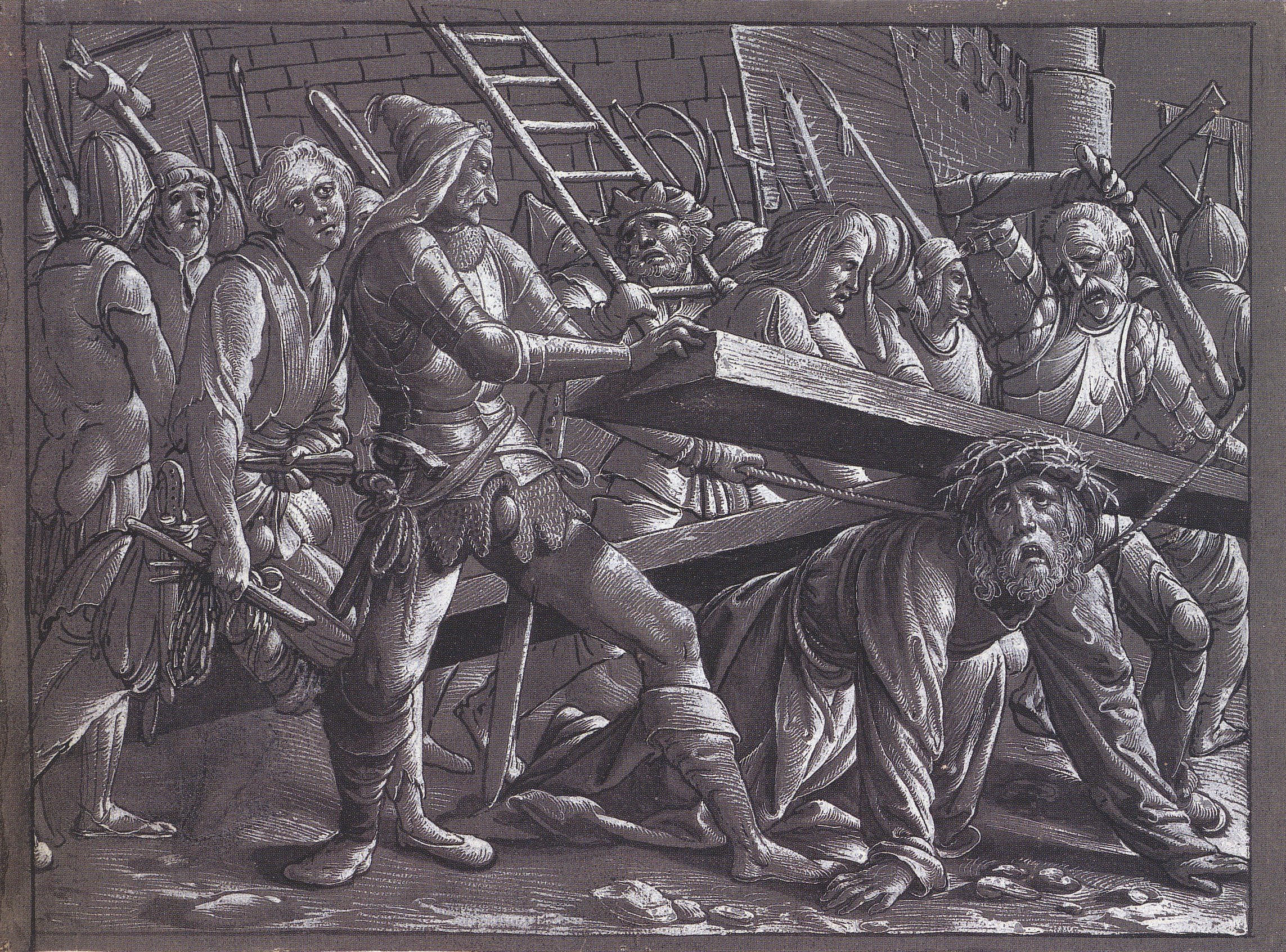
Christ Carrying the Cross, Hans Holbein the Younger

Sometimes God would speak to His Old testament prophets by drawing their attention to something ordinary, like a pottery working with clay. This ordinary sign reminded me of a situation that I witnessed twenty years ago, but still speaks divine truth to me.

I knew someone who purchased a hot tub, and it became a painful embarrassment to him. He lived on a fixed income, yet he purchased a hot tub he discovered at a clearance sale. To him this was a welcome, and affordable blessing for his family to enjoy after a stressful week.

Until he opened the electric bill.

When he purchased this luxury item, he only considered the benefits of relaxing with friends and family, but he underestimated the long term costs. I have a lasting memory of that empty hot tub sitting adjacent to a redwood deck, an embarrassing reminder of an unwise decision. So it is with a profession of faith that welcomes the benefits of the cross, but doesn’t fully consider the cost of taking it up and following Jesus:

“Whoever wants to be my disciple must deny themselves and take up their cross and follow me.” (Matthew 16:24)

Like the hot tub, a hasty profession of faith serves only as an empty embarrassment of a hasty decision.

Posted in Uncategorized | 1 Comment

New Sermon Series: Joseph’s Secret to Success

“The LORD was with Joseph so that he prospered…” (Genesis 39:2)

A successful career. A successful church. A successful life. Who doesn’t want success?

Joseph (in the book of Genesis) was successful. He became second in command of the most powerful empire in the world, and saved an entire civilization from certain destruction. However, these are not why he should be considered a success. In fact, one could argue that Joseph did not pursue success at all – he only pursued God.

Joseph is Ambushed, The Brick Testament

Furthermore, his road to success was one of great suffering and sorrow.

In his Letters and Papers from Prison, Dietrich Bonhoeffer wrote: “We must learn to regard people less in the light of what they do or omit to do, and more in the light of what they suffer.” If you really want to understand Joseph, look at his suffering. As we read through the stories of Joseph, we can see how his suffering shaped him to be used for God’s glory.

This Sunday we will begin a 7-part sermon series where we will look at Joseph’s unique path to success, and redefine for us what it means to be successful.

Posted in Uncategorized | 1 Comment

Who Needs (the Gridiron) God?

If football is a religion, as some have argued, then here is what a skeptic might sound like:

Don’t get me wrong. It’s fine that football teams pray after games. Lots of people get excited about this religion, and I respect their right to do so, but it’s not for me.

When friends invite me to a game, I respectfully decline. I don’t feel like getting up on a Sunday morning, driving to a stadium and sitting with strangers for 3 hours. I can see maybe going on Thanksgiving Day, but not every week.

953092053_byB9E-L

Notre Dame’s Word of Life “Touchdown Jesus” Mural

I saw a signup sheet in the break room for a football pool. I couldn’t help but notice that you had to pay to join. Everything has a price on it, even religion. And besides, I don’t think I can commit myself to 17 weeks.

I feel stupid when people at lunch start talking about football. Everyone takes for granted that I know who Cam Newton is, or why people hate Dan Snyder. Not everyone is a football scholar, you know. Dumb it down for me and maybe I’ll pay some attention to your religion.

The guy in the cubicle next to me is a religious fanatic. He is always reading something on NFL.com, even when he should be working. I get a little suspicious when he starts talking to me about “the big game” – I wonder if he is trying to convert me.

People are always wearing football jerseys on Friday. I believe religion is a private matter, not something you have to wear on your sleeve. They don’t realize that they might turn people off or offend someone.

Football can be controversial, just like politics. I don’t like the trash talking, and the arguing. These people can get really nasty.

My family watched football when I was growing up, but when I went to college I got out of the habit. Maybe someday, when my kids are out of the house and I retire, I’ll start watching football games again. I may even become a fan.

Posted in Uncategorized | 2 Comments

Does it Matter Where We Shop?

“The wages you failed to pay the workers who mowed your fields are crying out against you.” James 5:4

Ten years ago I joined a Community Sponsored Agriculture (CSA), and members were given the opportunity to meet the farmers growing the produce. I’ll never forget what one of them said: “Whenever you save money on food, you are probably costing someone somewhere.”

1896JamesTissotRuthGleaning

Ruth Gleaning, James Tissot

I had never considered this before, which is sad considering the biblical teachings calling for justice for the poor and oppressed. This goes beyond giving to the poor – God takes an interest in our business transactions, because they impact those providing the goods and services we purchase. How often do we consider the wages, living conditions and local economies of those growing beans for our morning coffee and cacao for our candy bars? Are they paid a fair price for their work?

Biblical faith requires us to think about such things before we buy:

  • In Amos chapter 8, God contemns Israel’s dishonest trading practices, for cheating and exploiting the poor by “skimping on the measure, boosting the price and cheating with dishonest scales” (vv. 4-7).
  • God prohibits “taking advantage of a hired worker who is poor and needy” (Deuteronomy 24:14), but requires employers to pay “his wages on his day before the sun sets, for he is poor and sets his heart on it; so that he will not cry against you to the Lord and it becomes sin in you” (Deuteronomy 24:15).

The fair trade movement supports farmers and artisans who are socially and economically marginalized, by ensuring prompt and fair payment for workers and producers who may go without food, shelter, clothing or dignity, because of their poverty. Learn more about fair trade principles and become a fair trade shopper whenever possible.

Financial stewardship is not just about how we spend our money (Luke 12:13-21). We should also prayerfully consider where we spend it.

Posted in Uncategorized | 1 Comment

Should We Complain to God?

“I cry aloud to the Lord; I lift up my voice to the Lord for mercy. I pour out before him my complaint; before him I tell my trouble.” (Psalm 142:1-2)

We live in a world that breeds discontent. We are bombarded with the message that to be happy we need more things, fewer wrinkles and better vacations. We also live in a world of sin, violence, sickness and death.

Jesus calls us to constant prayer (Luke 11:9-10), but what about our complaints?

king-david-at-prayer-1652

King David at Prayer, Rembrandt

There are numerous biblical references to believers like Job, Moses and David complaining to God in the midst of their troubles and suffering. There are also the Psalms of lament – prayers and songs that show us how to express our pain to God in a context of worship.

In these laments the authors pour out to God their sorrow (Psalm 137), anger (Psalm 140), fear (Psalm 69), confusion (Psalm 102), disappointment (Psalm 74), or depression (Psalm 88).

God expects us to experience pain and then express our pain in prayer and worship. We can do this privately, like David did when he wrote Psalm 142 (1 Samuel 22), and we can do this corporately, like the people of Israel did when they sang Psalm 142.

Psalms of lament remind us that God does not expect for us to always experience prosperity. They also model for us how to complain in a way that honors God.

Posted in Uncategorized | 3 Comments

How Desperate are We?

“Surely the Lord is in the place; and I was not aware of it” (Genesis 28:17). 

We associate the words “rock bottom” to describe disgraced politicians, drug addicts, alcoholics or anyone who experiences the consequences for their actions. The words can also describe anyone experiencing disappointment, frustration or depression. Stephen Covey names two things that motivate people to make dramatic changes in their lives: inspiration and desperation. There is tremendous power in hitting a low-point in life, because it can force us to consider serious changes.

jacob-s-ladder

Jacob’s Ladder, William Blake

Desperate. That’s how I imagine Jacob in Genesis 28:10-17. As he leaves his family, flees for his life, seeks safe haven from Uncle Laban and hopes to find a wife, I imagine his worries as he travels. What kind of reception would he receive from Laban? What could he possibly offer as a dowry? Could he ever return home?  I have to believe that he is experiencing guilt for being the worst kind of liar and thief – he deceived his blind, elderly father, and stole from his brother. Jacob is desperate. 

But for Jacob, it was not just desperation at work in his life. There was also inspiration.

Jacob, as shepherds often did, propped his head on a stone and slept under the stars. In his sleep he saw a stairway reaching from heaven to earth, with angels ascending and descending upon it. At the top was God.

One might expect God to rebuke Jacob for trying to work out his own plan, instead of trusting God. Instead God reminds him of the promises he gave to his father Isaac, and his grandfather Abraham, that He plans to bless the world through him. Jacob realizes that God is with him, which gives him inspiration to continue his journey.

Jacob’s ladder reminds us that God is still working in us even when we reach the point of frustration and desperation. This should inspire us.

Posted in Uncategorized | 1 Comment

Can Success Be Dangerous?

Whether it be in the classroom, the business world, the ball field or the mission field, success can be exhilarating. There is satisfaction from knowing that your hard work has paid off, your goals have been met and the outcomes have met (or even exceeded) your expectations. Just ask LeBron James, Mark Zuckerberg or the pastor of a 5,000+ member church.

christ72tissot

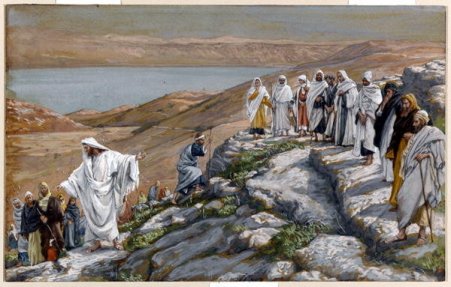
Christ Sends Out the Seventy, James Tissot

Consider the 72 people sent by Jesus on a risky mission. Taking nothing but the clothes on their backs, they entered the surrounding communities, ate in the homes of strangers and proclaimed the kingdom of God. They returned and celebrated their success:

The seventy-two returned with joy and said, “Lord, even the demons submit to us in your name.” (Luke 10:17)

Success is exhilarating, but it is also dangerous. Ironically, ministry success threatens our faith. The disciples were tempted to put their joy and confidence in the authority they asserted over the powers of evil, but Jesus revealed a secret that protected them from the threat of success:

“Do not rejoice that the spirits submit to you, but rejoice that your names are written in heaven.” (Luke 10:20)

Ministry success is defined in various ways: Reaching more people, developing more leaders and growing more disciples. These can be good measurement tools for evaluating a church’s faithfulness,  but we cannot let them become the source of our joy in ministry.

Jesus protects our joy from the threat of success by reminding us of our true citizenship, and promising us the great reward of heaven. Nothing can take away this joy…not even success.

Posted in Uncategorized | 1 Comment

Abraham and the Appointment System

“Go from your country, your people and your father’s household to the land I will show you.” Genesis 12:1

On July 1, many United Methodist pastors received new appointments. They unpacked their books, and began meeting parishioners. Last Sunday they preached their first sermon, and anticipate their first potluck. Pastoral transitions are happening everywhere.

While I couldn’t find the word “transition” in any English Bible translations on my shelf, it seems to be the norm in the Bible. Consider Abraham, who faced geographical, religious and family transitions when he left his father’s house.

god-s-promises-to-abram

God Promises to Abraham, James Tissot

Geographical. God told Abraham to pack his gear and relocate. Unlike United Methodist clergy who are transitioning, he was not given a moving service (Abram likely would not have complained about the 15,000 pound limit) or a destination with a warm welcoming party. However, he could relate to the sense of being a stranger in a foreign land.  Who are my neighbors? What is there to do around here? Who are these parishioners? Where can I find a good dentist? What is the mission field like? Where do I find organic food and raw milk (while escaping the watchful eyes of the state)? Transition means adapting to new surroundings.

Theological. Abraham left everything familiar, including his religion. No more impressively built ziggurats, and no more moon gods to provide blessing and prosperity. He would now be a monotheist, worshipping an unseen God. While United Methodists share a common heritage, doctrine and structure, they have diverse opinions about political, social and theological issues. For United Methodist pastors, a new appointment doesn’t require changing religions, but it often requires seeing things from other points on the theological spectrum.

Family. Abraham didn’t have any children when he left Haran, but he did leave with his father’s household, his wife, his servants and his nephew. The transition affected them as well. Abraham likely had strong family ties that were severed when he left town. Transitions can be challenging for clergy families, and churches can become like extended family to pastors, their spouses and their children. While United Methodist clergy are excited about their new opportunities, they also experience the grief of saying goodbye to family members.

As disciples of Jesus Christ, we are called to give up everything in this world with which we’ve grown comfortable, including our expectations of this world. Like Abraham, we sometimes have to leave the familiar in order to go where God sends us.  We’re not told that God let Abraham know where he was going. God just told Abraham he would travel with him and bless him.

Posted in Uncategorized | Leave a comment

Was Elijah Depressed?

“O Lord, take away my life…” 1 Kings 19:4

Elijah had just endured the incredible strain of single-handedly opposing 450 prophets of Baal and 400 prophets of the Asherah. God vindicated his faith, and he ran exuberantly for miles in front of the king’s chariot. When he heard that the king’s wife, Jezebel, vowed to kill him, he went into the wilderness and sat down under a broom tree.

Most pastors and spiritual caregivers are not qualified to diagnose clinical depression. This requires a complete medical history, a physical exam and depression screening. Doctors ask questions to look for common symptoms of depression, and how these are affecting a person’s ability to function. Depending on the screening tool, they might ask:

elijahfood

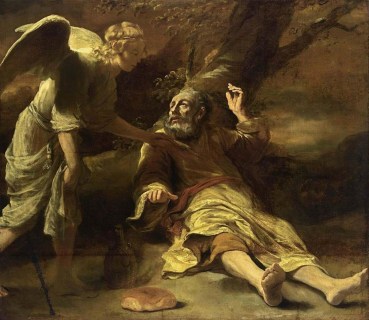
Elijah Fed by an Angel, by Ferdinand Bol

“Have you had any thoughts of suicide?” In his fear and exhaustion Elijah went into the wilderness, sat down under a broom tree, and said, “It is enough; now, O Lord, take away my life; for I am no better than my fathers” (1 Kings 19:4).

“How is your energy?” and “How is your sleep?” By the time Elijah got to the wilderness he was weak from fatigue. Twice he fell asleep, and twice an angel of the Lord said, “Arise and eat, for the journey is too great for you” (1 Kings 19:7).

“Do you prefer to stay at home rather than going out and doing new things?” Elijah resumed his journey, and moved in a cave. “The word of the Lord came to him, and he said to him, “What are you doing here, Elijah?” (1 Kings 19:9).

“In the past two weeks, how often have you felt down, depressed, or hopeless?” Elijah poured out his despair before God: “The people of Israel have forsaken your covenant, thrown down your altars, and killed your prophets with the sword, and I, even I only, am left, and they seek my life” (1 Kings 19:10).

This is not a modern diagnosis of an emotionally distressed prophet. The causes and cures of clinical depression are complicated and mysterious, and should not be oversimplified. However, I see three important lessons in Elijah’s story that could apply to depression:

  • Despite Elijah’s great faith he is one example of how grief and despair are recurrent themes throughout Scripture. Some of the greatest saints have walked through the darkest of times.
  • While we might feel awkward or embarrassed to talk about it, Christians are not immune to such feelings, including depression.

  • God is with us through our grief, despair and depression. For Elijah, this did not come in the form of wind, earthquake or fire, but in “the sound of a low whisper” (1 Kings 19:12).

Posted in Uncategorized | Leave a comment