Filling in the Christmas Gaps

Much is implied in the Christmas story that we can miss if we don’t dig deeper into the story. There are questions to be asked. For example:

The Christmas story starts with Emperor Augustus, who is adding to his wealth, calling for a census of his subjects for taxation purposes. What does this one sentence tell us about the people Jesus would be a part of, and the people who are in charge?

El Greco’s Annunciation

Mary and Joseph are making the trip to Bethlehem as part of the census. They likely aren’t traveling alone, but with people from their hometown.  Have they been shrouded in scandal: unmarried and pregnant? How does this complicate their social and religious acceptability? Could this have something to do with not finding any room in the inn?  

Joseph, being a righteous man, intended to do the “righteous thing” by dissolving the betrothal between Mary and himself. Would other people think the “righteous thing” to do would be to avoid association with Mary as well?

Jesus ends up being born in impoverished conditions. Someone has allowed them in, at least offering their stable. Was the family who let them in doing them a kindness? Can’t they show better hospitality?

Hopefully this motivates you to do some digging into the story.

Posted in Uncategorized | 1 Comment

Can We Keep Politics Out of the Bible?

He has put down the mighty from their thrones, and exalted the lowly. – Luke 1:52 (Mary’s Song)

Not completely.

James Tissot, Magnificat

Mary is pregnant, and she sings about it. Mary has been approached by an angel with the news that, while still a virgin, she will give birth to the Most High. Mary sees this as a world shaking event that has huge consequences: a world turned upside-down: the roles of power and wealth are reversed.  This is pretty bold speech: a peasant girl from a small town speaking truth about the Roman Empire. Mary was already at risk of being condemned by her faith community for being pregnant outside of marriage: now she speaks words that could get someone arrested. 

Preachers go too far when they claim that the Bible or the Gospel endorses one partisan point of view. I doubt that Mary’s song is a manifesto on how nations and economies should be built.  Mary’s vision of a world turned upside down was not literally fulfilled in her lifetime. So how do we find relevance in her song? 

Embrace a Gospel that challenges modern assumptions about what and who matters. For Mary, wealth and power are transitory. It’s people that matter, particularly those who are poor and on the margins of society. People like Mary. 

Posted in Uncategorized | Leave a comment

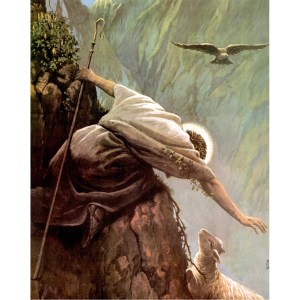
Reading Psalm 23 as a Travel Guide

I’ve read this passage so many times, but as with all of Scripture it feels like I’ve just scratched the surface. The book of Psalms is a collection, an anthology, a hymnal, a book of songs. This time I thought of Psalm 23 as a photograph album, full of pictures of places in a land of spiritual experience. It’s a record of an actual journey, which serves as our travel guide,

This travel guide doesn’t give you a detailed description of places. Sure, you can dig for information that helps you better understand the geography and the shepherd’s vocation. This is valuable, but a good travel guide invites you to imagine, and to explore on your own.

The Psalm 23 travel guide awakens all of of our senses. We can touch the soft green pasture and the refreshing still waters. We can taste the food at the banquet table . We can hear the call of the shepherd. We can imagine what’s it like to be there.

Read the Psalm 23 travel guide with confidence, knowing it was written by someone who has been there.

Posted in Uncategorized | Leave a comment

Functional Atheism and a Mindset of Scarcity

In his book, Let Your Life Speak, Parker Palmer describes functional atheists as people who claim they believe in God but function in their lives as atheists. “It’s the godless belief that the ultimate responsibility for everything rests with us.”

We may talk of our trust and faith in God, but we may doubt God will show up in time and wonder if we need to be the ones to make things happen. This results in a Christian witness and lifestyle that lacks spiritual integrity on a core level.

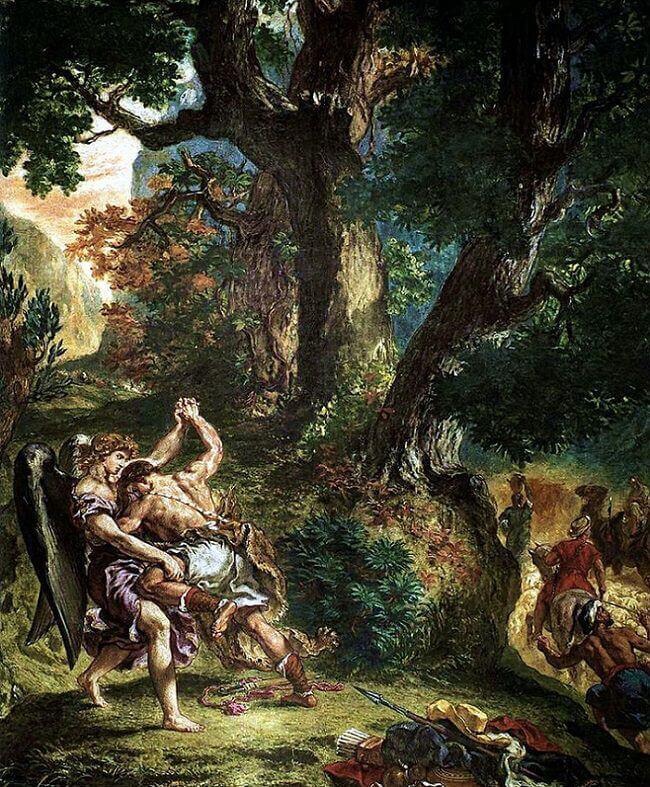
Jacob Wrestling with the Angel by Eugene Delacroix

Functional atheism is not a new phenomenon. Sarah felt she had to take over for God and secure her lineage by giving Hagar to Abraham. Moses struck the rock instead of following God’s direction for securing water. Martha tried to inform Jesus on how he should handle Mary.

Functional Atheism is glaring in Jacob throughout his entire life (Genesis 25:19–34:27). God has promised him blessing and prosperity, but he insists on attaining it. He uses deception and manipulation for the desired outcomes in Esau and Laban. This struggle against God reaches its climax at the Jabbok River, where he wrestles with what might have been God himself. The fight seems to end in a stalemate, until Jacob still insists on control. He demands a blessing, but gets a dislocated hip instead.

Followers of Jesus and the churches that they form want big things and face huge challenges, but in reality have limited control over them. God is in control of it all. We are in control of ourselves. We control our responses to crises, conflicts and temptations. We decide whether or not to fulfill the vows made at our baptisms. We choose to place our lives in useful submission to God.

The truth is is, there is only one that can be God and it isn’t us.

Posted in Uncategorized | Leave a comment

Let Go and Let God?

“The LORD will fight for you; you need only to be still” (Exodus 14:14). 

It’s a handy phrase to have in a difficult conversation about a difficult situation. I can’t do anything about this problem, so I’ve placed it in higher hands. Who can object to that?  It depends on what we need to let go. There is wisdom that belongs to God alone. Miraculous works that only God can perform. Evil that only God can defeat. Acknowledge those situations and leave them in higher hands.

The Crossing of the Red Sea, Nicolas Poussin

The story of Israel’s Red Sea crossing is a great example of letting go and letting God. Moses sees the superior army, the sea barrier and the fear of the people. He also sees God who overcomes these.

Let go and let God implies that we are attached to things we need to let go: Possessions we don’t need or shouldn’t have. Frustration from not being in control. Fear that paralyzes us from taking a bold step of faith. Anxiety that disrupts our peace. Anger that obstructs our love. We can choose to allow these to hang on to us. Or we can release them, and create space for God to do His work.

Posted in Uncategorized | 1 Comment

Putting Women in Their Place?

“I do not permit a woman to teach or to exercise authority over a man; rather, she is to remain quiet.” 1 Timothy 2:12

Reading and interpreting 1 Timothy 2:12 in isolation, we make it say something Paul never intended.q It has a context. It’s about listening and learning. 

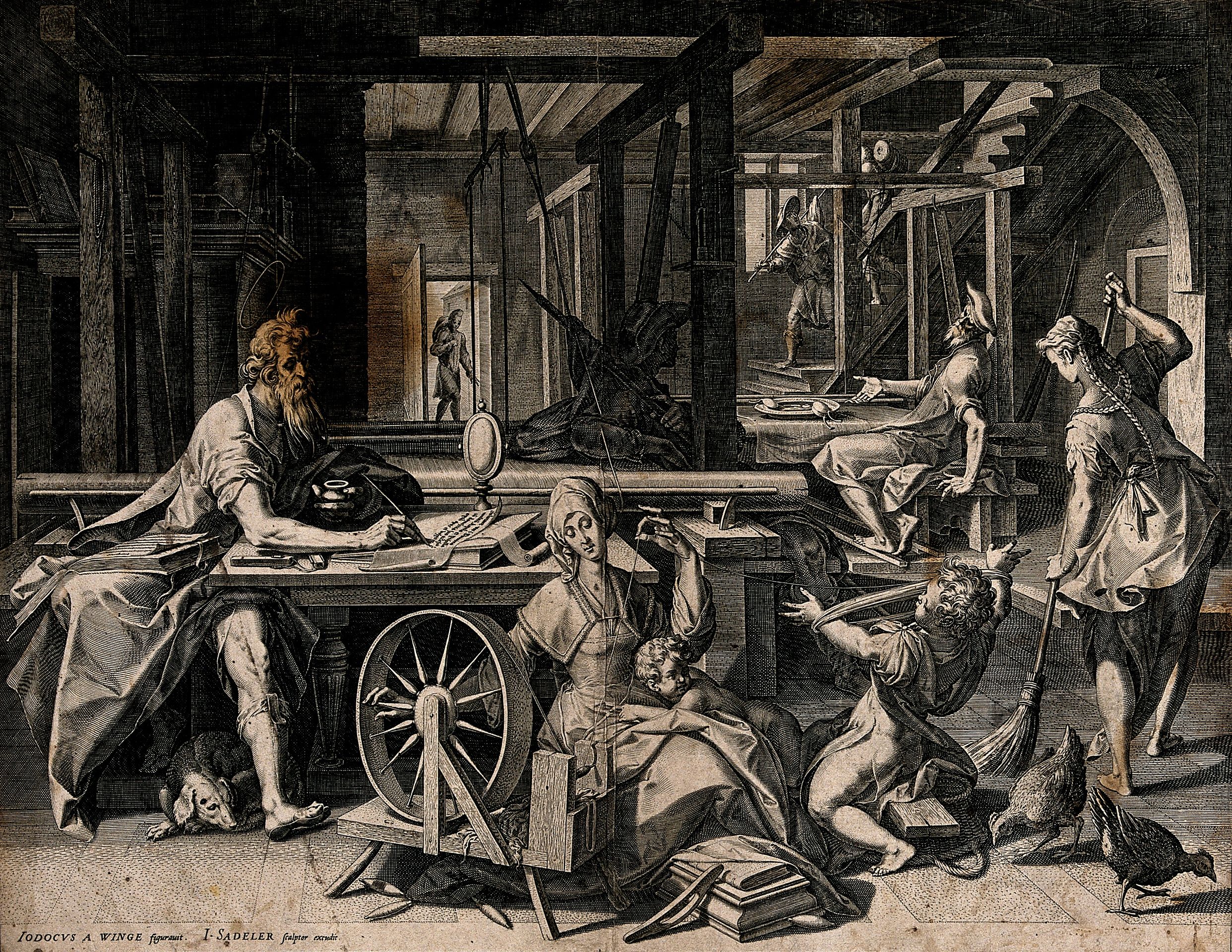
Paul brought women into corporate worship (considered a radical step at the time), because in Christ, there is neither “male nor female” (Galatians 3:28-29).  Women served as top leaders in the church. Paul declared Junia as an outstanding among the apostles (Romans 16:7). He invites Priscilla and Aquilla to teach Apollos.  He lists Priscilla’s name first, showing her as the primary leader (Acts 18). 

Aquila and Priscilla of Rome

Paul’s teaches Timothy how to protect the church from false teachings (1:3). He didn’t permit a woman to teach or have authority over men in that congregation, but not because of their gender. Women did not have the same education as men, so Paul’s restriction was meant to protect the church from false teaching. He was also giving women an invitation.

Paul says that the women should “remain silent,” In Paul’s time, silence was afforded to those who could engage in learning. Paul was inviting women out of the kitchen and into the living room where the men were gathering, so they could learn the faith alongside their husbands. The implication is, once these women were more educated in the faith, they could do what Junias, Priscilla and other women were doing: Lead.

Paul took three years to learn the faith before he became a missionary, so he knew the value of careful learning in order to sustain the challenges of the mission field. How many times has someone stepped forward in ministry, but has been unable toPaul took three years to learn the faith before he became a missionary, so he knew the value of careful learning in order to sustain the challenges of the mission field. How many times has someone stepped forward in ministry, but has been unable to sustain their passion?

I Timothy 2:12 urges us all to be quiet. Listen to others tell their stories about their faith. How they came to Christ. How they are experiencing Christ. Learn from those who are mature in the faith. What they have learned from the Scriptures, and what they have learned from their own struggles. By doing so we can grow in Christ. 


Posted in Uncategorized | Leave a comment

Why do We Hesitate?

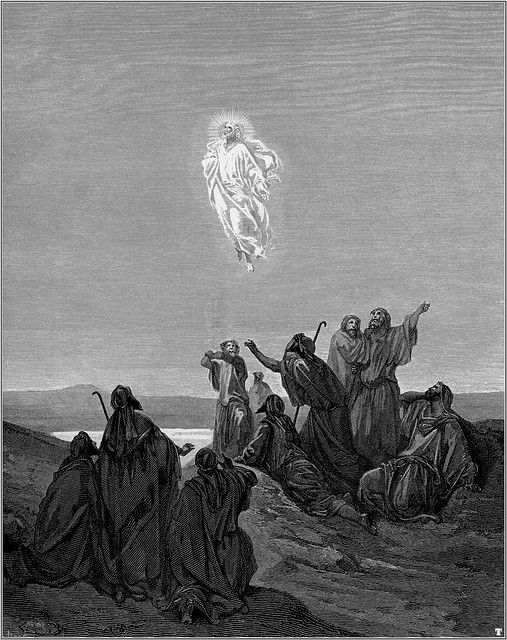
When they saw him, they worshiped him; but some doubted. – Matthew 28:17

Hesitation provides time to think about a situation, gather information and weigh the facts. Maybe the choice really matters to you. Maybe  hesitation is a warning that you’re about to make the wrong decision. This is not the same as hesitating until an opportunity is lost or we lose sight of a God given vision.

Why do we hesitate? The answer requires serious examination of our hearts:

Do we prefer privacy over loving accountability? God has called us into relationships that pull us out of doubt and hesitation: spiritual conversation, mutual prayer and healthy accountability. “Whoever isolates himself seeks his own desire; he breaks out against all sound judgment”(Proverbs 18:1).

Can we discern between faith and fear? Sometimes fear protects us from dangerous things. Other times fear eaves us making no decision at all.  God gives us wisdom to decide between the necessary risks of faith and the appropriate cautions of wisdom. “If any of you lacks wisdom, let him ask God, who gives generously to all without reproach, and it will be given him” (James 1:5).

Do we prefer comfort over commitments? We grow comfortable with our routines. Many believers have had to push themselves to return to church services because they’d grown comfortable with their no-commute, no-prep Sunday mornings at home. Or they could just do whatever they wanted on the weekend and watch a recorded service later.

There are many reasons why we hesitate, so let’s diagnose our hearts. Proverbs 20:5 says, “The purpose in a man’s heart is like deep water, but a man of understanding will draw it out.” We’re all masters at mental maneuvering, and our hesitations often flow from unexamined thoughts and feelings. 

Posted in Uncategorized | 1 Comment

Conflict Resolution: It’s Not All About Me

“If your brother or sister sins, go and point out their fault, just between the two of you. If they listen to you, you have won them over.” Matthew 18:15

Do you ever avoid resolving conflict? It’s uncomfortable. We experience fear and anger. When we experience pain in a relationship, we think trying to resolve it can create more pain. When we choose to see conflict resolution as a negative experience, we try to protect ourselves and avoid it. When we do approach the person, we can vent, describe how we have been hurt and maybe even be right. Notice how we have made conflict all about us. Instead of seeing conflict resolution only as a way of alleviating our pain, think of it as an act of love for the offender. 

“God’s love is too great to be confined to any one side of a conflict…,”

When preparing for that difficult conversation (not email or social media) ask: Why is this relationship important to me? What value do I see in this person? How does God see them? Perhaps most important: what do I want for this person? Forgiveness? Reconciliation? Freedom from anger? For them to reach their full potential in Christ?

Conflict resolution is not all about you.

“By this everyone will know that you are my disciples, if you love one another.” John 13:35

Posted in Uncategorized | Tagged , , | Leave a comment

Why Do We Avoid Silence?

The prophet urges us, “The Lord is in his holy temple; let all the earth be silent before him.” (Habakkuk 2:20).  The Psalmist invites us to “Be still, and know that I am God” (Psalm 46:10). The Lord showed Elijah and us that to sense his presence and hear his message we need to be quiet and listen for God’s  “gentle whisper” (1 Kings 19:12).

With so many diversions and distractions, silence is a rare experience for many of us. This is sad, because silence allows us to hear God and open our hearts to God. Silence allows us to honestly examine ourselves in the presence of God. Do we take enough time in church meetings and Sunday morning gatherings for wordless worship, quiet reflection and prayer?

Ministry and even worship services can actually provide diversions and distraction to elude encountering God. This is sad, because our external activities in the world should derive from our intimacy with God. The life of Jesus illustrates a pattern of taking time away from teaching and healing, and seeking significant time to be with God (Luke 5:16; Mark 1:35). This provided him with the inner strength to deal with the outward pressures imposed by both those who opposed him and those who depended on him.

Silence helps us refocus on God, and it energizes our ministry. When we turn to God in silence during our daily activities, we become more conscious of God in the routines of everyday life. When we set aside time in our schedules for silence, we walk and talk with God. When we take time in church meetings for silent prayer, we better discern the difference between Christian activities and serving in Christ’s name. When we come ten minutes early for a worship gathering and sit in silence, worship becomes more of an encounter.

Posted in Uncategorized | 1 Comment

Should We Complain to God?

Then Moses returned to the Lord and said, “O Lord, why have You brought harm to this people? Why did You ever send me? Exodus 5:22

We live in a world that breeds discontent. We are bombarded with the message that to be happy we need more things, fewer wrinkles and better vacations. We also live in a world of sin, violence, sickness and death.

Jesus calls us to constant prayer (Luke 11:9-10), but what about our complaints?

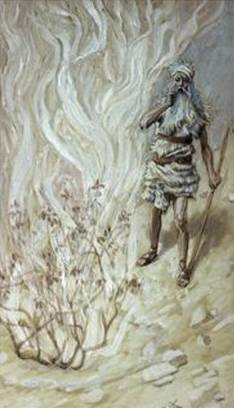
James Tissot’s Moses and the Burning Bush

There are numerous biblical references to believers like Job, David and Moses complaining to God in the midst of their troubles and suffering. Despite his worries and doubts, Moses obeyed God. He fails in his first attempt to lead God’s people out of slavery, and things only get worse. Out of despair he complains to God. Is that a sign of discontent and a lack of faith? Or are complaints a part of a relationship with God?

Consider the Psalms of lament – prayers and songs that show us how to express our pain to God in a context of worship.

In these laments the authors pour out to God their sorrow (Psalm 137), anger (Psalm 140), fear (Psalm 69), confusion (Psalm 102), disappointment (Psalm 74), and depression (Psalm 88).

God anticipates that we will experience pain, so he gives us language to express it in prayer and worship. We can do this privately, like David did when he wrote Psalm 142 (1 Samuel 22), and we can do this corporately, like the people of Israel did when they sang Psalm 142.

Psalms of lament remind us that God does not expect for us to always experience prosperity. They also model for us how to complain in a way that honors God.

Posted in Uncategorized | Leave a comment