Is the Bible Too Hard to Understand?

This is a very important question for Christians, who believe the Bible to contain God’s words to us.

The Bible can be intimating and confusing:

1. The Bible is a printed book. Our culture has a shrinking preference for reading books, especially complex ones. We can get our information from things like blog posts, news summaries and video clips. These are informative, but they are brief. They do not require in-depth analysis or thoughtful reasoning.

2. The Bible can be complex. Its stories, poetry, letters and laws were written in ancient times and written in ancient languages. The assumptions and attitudes of the authors are not the same as ours. In many cases, interpreting the Bible requires our patience and work, which can sometimes be discouraging.

The Bible is not TOO hard to understand:

1. It’s original authors were writing for the common person, not the educated elite. The Old Testament law and New Testament epistles were read in their entirety to whole congregations. In another words, the Bible was intended to be understood by all of us. 

2. There are many tools and resources to help us understand and apply the Scriptures. There are pastors and teachers who are called to this ministry. Study Bibles, commentaries and reference guides are written for laity with no formal training. Small groups provide places where people can learn from each other.

God does not speak in a way we can’t understand. Prayer, meditation, stillness, fasting, and study put us in a place where we can hear God. We can get discouraged from studying God’s Word not because it is hard to understand or because it is boring. We can get discouraged because study sometimes involves discipline and work.

Posted in Uncategorized | 5 Comments

Abraham and the Appointment System

“Go from your country, your people and your father’s household to the land I will show you.” Genesis 12:1

On July 1, many United Methodist pastors received new appointments. They unpacked their books, and began meeting parishioners. Last Sunday they preached their first sermon, and anticipate their first potluck. Pastoral transitions are happening everywhere.

While I couldn’t find the word “transition” in any English Bible translations on my shelf, it seems to be the norm in the Bible. Consider Abraham, who faced geographical, religious and family transitions when he left his father’s house.

god-s-promises-to-abram

God Promises to Abraham, James Tissot

Geographical. God told Abraham to pack his gear and relocate. Unlike United Methodist clergy who are transitioning, he was not given a moving service (Abram likely would not have complained about the 15,000 pound limit) or a destination with a warm welcoming party. However, he could relate to the sense of being a stranger in a foreign land.  Who are my neighbors? What is there to do around here? Who are these parishioners? Where can I find a good dentist? What is the mission field like? Where do I find organic food and raw milk (while escaping the watchful eyes of the state)? Transition means adapting to new surroundings.

Theological. Abraham left everything familiar, including his religion. No more impressively built ziggurats, and no more moon gods to provide blessing and prosperity. He would now be a monotheist, worshipping an unseen God. While United Methodists share a common heritage, doctrine and structure, they have diverse opinions about political, social and theological issues. For United Methodist pastors, a new appointment doesn’t require changing religions, but it often requires seeing things from other points on the theological spectrum.

Family. Abraham didn’t have any children when he left Haran, but he did leave with his father’s household, his wife, his servants and his nephew. The transition affected them as well. Abraham likely had strong family ties that were severed when he left town. Transitions can be challenging for clergy families. Churches can become like extended family to pastors, their spouses and their children. While United Methodist clergy are excited about their new opportunities, they also experience the grief of saying goodbye to family members.

As disciples of Jesus Christ, we are called to give up everything in this world with which we’ve grown comfortable, including our expectations of this world. Like Abraham, we sometimes have to leave the familiar in order to go where God sends us.  We’re not told that God let Abraham know where he was going. God just told Abraham he would travel with him and bless him.

Posted in Uncategorized | Tagged , , , , | Leave a comment

80 Year Old Methodist Rules That Can Save Churches 

  1. “…doing no harm, avoiding evil of every kind…”
  2. “…doing good of every possible sort, and as far as possible to all.” 

The early Methodists were well known for small groups of people who helped one another grow in Christ, by offering one another encouragement and support. They were little churches, and their life together was guided by John Wesley’s General Rules. 

With the emphasis on the individual and the deterioration of community in the world, it is easy to see these simple rules as only applying to individuals. However, our personal relationship with Christ should always support the church family’s life together. The General Rules can help believers orient both their individual and corporate lives toward Christ.

Methodist Class Meeting

Our need for community is constantly threatened by self-centeredness.  Churches have never been without controllers, dissenters, and faction builders.  The Church must take care that it is not killing community through divisiveness, pride, criticism, and selfishness.  Those who create such confusion in the body of  Christ should consider Wesley’s first General Rule to “do no harm.”

Just as the threat to community is self-centeredness, the vital builder of community is other-centeredness.  The second General Rule tells us to do every possible good to all persons.  Practical concern for the homeless, the orphan, the widow, and the social outcast exemplifies this principle.  This kind of corporate spirituality goes against our fallen instincts for isolation, self-gratification and control.  But the greatest experiences of joy take place when we are serving and sharing our lives with others.  Our personal relationship with Christ is expressed in the ways we love and serve the people around us.  

A congregation’s effectiveness depends on how clearly its members understand their purpose, and hold themselves accountable to that purpose.  By evaluating their work in light of the General Rules, they can measure their contribution to building the body of Christ and serving Christ in the world.  This corporate accountability would serve to keep the church’s work and the personal relationships of its members focused on its mission of making disciples of Jesus Christ. If we do not seek to walk as Jesus walked, we weaken and ultimately break our covenant relationship with God and with each other. 

Posted in Uncategorized | Tagged , , , , | 1 Comment

Every Experience Makes Us Better

The prayer of a righteous person is powerful and effective. – James 5:16

A.W. Tozer, a popular pastor, author, once wrote: “When I understand that everything happening to me is to make me more Christlike, it resolves a great deal of anxiety.”

 Joy and pain. Peace and turmoil. Suffering and ease. People who love me and people who hurt me. Knowing that God is using everything to make me more Christlike does make me less anxious. God is always for me (Romans 8:32). God uses all my circumstances for good (Romans 8:28). Everything in my life can direct me to Christ. 

Whenever I feel frustrated, maybe God is inviting me to examine my own heart instead of focusing my attention outward. God may be doing something far more important in me than what is happening to me. I should stop complaining about my situation and discern why God brought this situation into my life.

 My difficult circumstances can cultivate a dependence on Christ. Teach me to pray harder. Give me opportunity for ministry.  To see my sin of pride and confess it.  Everything can be a stepping-stone to knowing God better. To fully live out this perspective, we need to actively seek out and ask God what he is trying to show us.

Posted in Uncategorized | Leave a comment

Can We Pray Like Elijah?

James 5:16 (NIV): “Confess your sins to each other and pray for each other so that you may be healed. The prayer of a righteous person is powerful and effective.”

James encourages all of us to pray for each other that we may be healed. James goes on to say that “The prayer of a righteous person is powerful and effective.” Then he gives Elijah as the example.

James 5:17 (NIV): “Elijah was a human being, even as we are.”

Elijah was the greatest Old Testament prophet, but he was not so extraordinary that he cannot be a model for prayer. He didn’t experience miracles just because he was a unique spokesmen for God. Elijah was just like us, so we can be encouraged that OUR prayers will have great effect—like stopping the rain for three and a half years.

We should think of our praying in the same category with a great miracle worker of the Bible. All of us should be praying for each other. Our goal in praying should be to live and pray in a way that would have the same kind of healing effects as Elijah had when he prayed for rain after a three-year drought.

Posted in Uncategorized | Leave a comment

True Wisdom and False Wisdom

I’m preaching from James 3:13-4:3 this Sunday. For James, wisdom is defined not as intellectual brilliance, but as doing good. True wisdom helps us to discern what is good. When we look at the things we do, we need to think about “Is this good for all? Or is this just good for me?” True wisdom produces humility. 

This emphasis on humility was unpopular in first century Greco-Roman culture, just as it is in 21st century North American culture. The contemporaries of James saw humility as a groveling. Epictetus, a Greek philosopher, put is first in a list of faults to be avoided. 

Can the humble succeed in life, or will people run over you if you are humble? Don’t we have to stand up for ourselves and fight for what we want?

False wisdom leads to fighting.  When you fight for what you want, you’ll get fighting everywhere—from the endless wars in the Middle East, to the infighting of corporate boardrooms, to the cruelties of the school playground.  “What causes fights and quarrels among you?  Don’t they come from your desires that battle within you?  You want… you covet…, you quarrel and fight….”

Posted in Uncategorized | Leave a comment

Can Churches Perform Miracles?

Very truly I tell you, whoever believes in me will do the works I have been doing, and they will do even greater things than these, because I am going to the Father. – John 14:12

I’m trying to imagine being one of the 12 disciples and hearing this. They had witnessed Jesus performing signs and wonders: Healing the sick, raising the dead, multiplying food and controlling the forces of nature.

That’s a pretty high bar, and Jesus was being serious in John 14:12. These greater works were related to both Jesus’ going to the Father, and the Holy Spirit’s coming (John 16:7). When the disciples received the Holy Spirit, they healed the lame, the blind, the paralyzed, and the sick, just like Jesus. They cast out demons. They spoke in unknown languages, were unharmed by poisonous snakes, and the ground shook when they preached. Even their shadows, and the handkerchiefs they touched produced miracles.

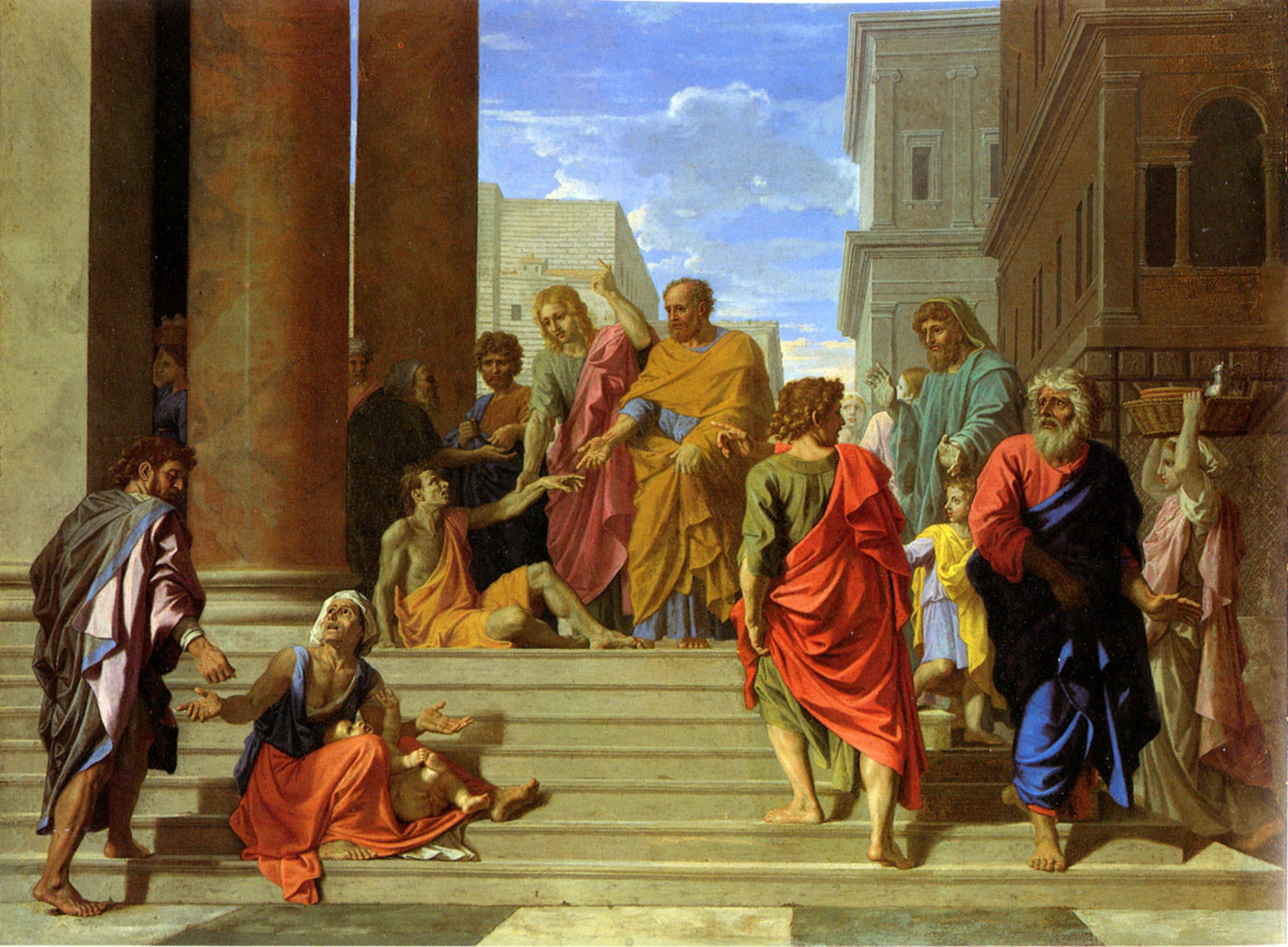
Peter and John Healing the Lame ManNicolas Poussin

Peter and John Healing the Lame Man, Nicolas Poussin

These works of the Holy Spirit are described throughout the book of Acts, as the church took root and grew rapidly (e.g. 2:4; 5:15; 8:39; 9:36-42; 19:12; 20:9-12; 28:3-6).

What if Jesus’ words were also meant for the modern Church? Not just his theology and ethics, but also His promises that His people will perform signs and miracles through the power of the Holy Spirit? His words in John 14:12 seem incredible to me, but not just because they test my faith in the supernatural and mess with my theology. They also force me to examine my own weaknesses, sins and shortsightedness.

I have seen churches use modern technology, management techniques, and creative programming, and they can produce positive results. They can also offer security and predictability. They allow the programmers a certain amount of control over the outcomes.

Is this what spirit-filled ministry is supposed to do? The Holy Spirit, as Jesus told Nicodemus, is like the wind – although we know it’s there, we don’t know where it is going (John 3:8). In other words, when and where the Holy Spirit moves is neither predictable nor controllable.   

There are no prepackaged programs that allow churches to set aside our seeking the direction and power of the Holy Spirit. We should take very seriously the implication of the book of Acts: ministry should not be attempted without the Holy Spirit.

Consider the inspired words of a Eastern Orthodox bishop:

Without the Holy Spirit…

God is far away, Christ stays in the past, the Gospel is a dead letter, the Church is an organization,  mission a matter of propaganda, Christian living a slave morality.

With the Holy Spirit…

The risen Christ is here, the Gospel is the power of life, the Church shows forth the life of the Trinity, mission is a Pentecost and human action is deified.

Posted in christianity, Uncategorized | Tagged , , , , , , , , , , | 1 Comment

Pontius Pilate: Ruthless or Indecisive Governor?

When Pilate saw that he could not prevail at all, but rather that a [c]tumult was rising, he took water and washed his hands before the multitude, saying, “I am innocent of the blood of this [d]just Person. You see to it.” Matthew 27:24

The Gospel writers give their account of Christ’s passion, they were not trying to give a biography of Pontius Pilate. Without historical context, It is easy for us to see Pilate as a weak and indecisive governor. He is afraid of an angry mob, so he gives in to the Jewish aristocracy and has Jesus crucified.

But history and other New Testament passages describe a Pontius Pilate who could be ruthless and willing to keep the peace at all costs.

According to the Jewish historian Josephus, when Pilate brought images of Caesar on Roman shields and standards into Jerusalem, protesters gathered. He threatened to ”cut them in pieces, and gave intimation to the soldiers to draw their swords.” The Jewish protestors refused to budge, and Pilate eventually relented.

Josephus also tells us that Pilate built an aqueduct using temple treasury money. When protestors gathered, he had soldiers dress like common men, “gave the signal from his tribunal, and many of the Jews were so sadly beaten, that many of them perished by the stripes they received.”

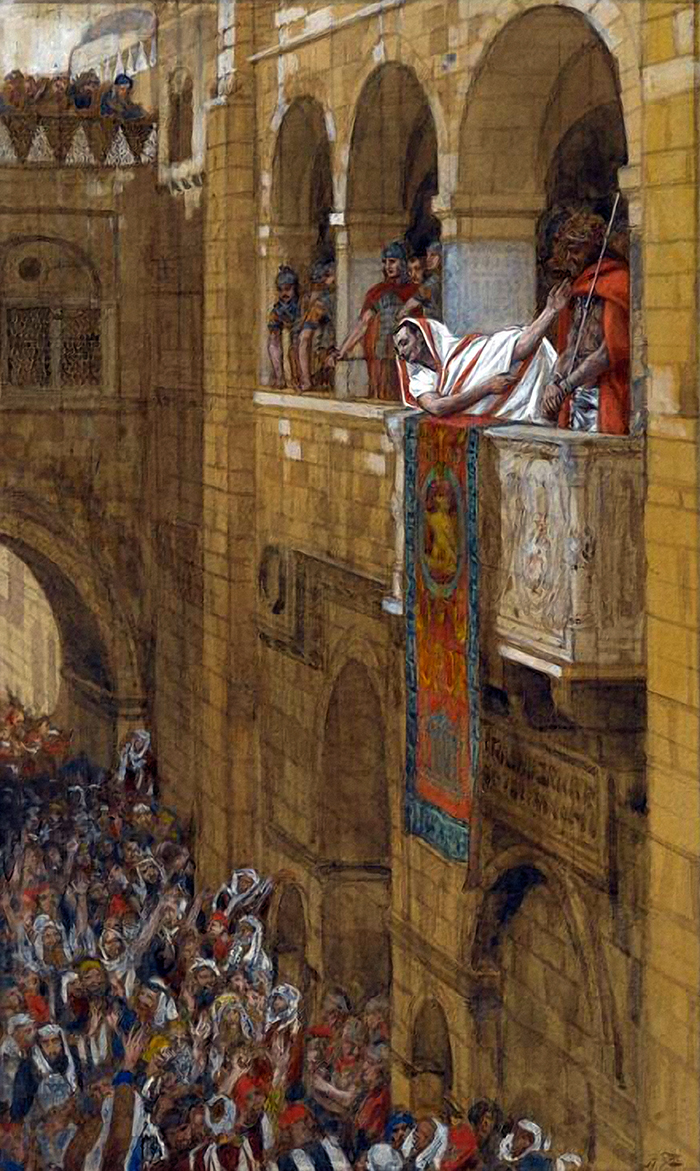
James_Tissot_Ecce_Homo_700

Behold the Man (Ecce Homo) – James Tissot

Philo, a Jewish philosopher, described Pilate’s “…corruption, his cruelty, and his continual murders of people untried and uncondemned.”

Luke mentions the “Galileans whose blood Pilate had mixed with their sacrifices” (13:1).

According to John, a detachment (speira) of soldiers accompanied Judas and temple officials at Jesus’ arrest  (18:12). The Greek word speira is a cohort of 600 Roman soldiers, who would have been under Pilate’s command.

Pilate normally would not hesitate to crucify a political threat or slaughter an angry mob. Why does he hesitate on Good Friday?

Posted in christianity, Uncategorized | Tagged | Leave a comment

‘Doubting Thomas’, a Model for Modern Faith?

Thomas is often infamously remembered as “Doubting Thomas,”  but is this an accurate label?  Indeed Thomas refused to accept Christ’s resurrection without physical evidence, but how does that set him apart from the others mentioned in the Gospel accounts? 

Mary Magdalene thought that someone had stolen Jesus’ body before she encountered Jesus in person (John 20:2).  When she brought the news to the 11 disciples, they thought she was crazy (Luke 24:11).  Jesus rebuked all of the disciples — not just Thomas — “for their lack of faith and their stubborn refusal to believe” (Mark 16:13–14).  In what might have been Jesus’ last appearance before his ascension there were still “some who doubted” (Matthew 28:17).   Other than the single attention he gets in John 20:24-25, why label Thomas in such a way?

Thomas serves as a wonderful model of modern faith.  Instead, Christians hold him up as a negative example because of his initial doubts.  His doubts had a purpose—he wanted to know the truth. He expressed his doubts fully, but didn’t idolize them. When Jesus answered them, he gladly believed. When you struggle with doubt, take encouragement from Thomas—and from countless other followers of Christ who’ve battled their doubts, and found God’s answers.

Posted in Uncategorized | Leave a comment

The Compassion of Judas Iscariot

Judas Iscariot Retiring from the Last Supper, Carl Bloch

During Holy Week we recall the events leading up to Christ’s crucifixion, and the men who played a part in having him executed: The religious aristocracy, Pontius Pilate and even one of Jesus’ closest followers.

The name of Judas Iscariot went down to the pages of history as the man who betrayed Jesus. Luke attributes this to Satan.  Matthew and Mark say it was because of greed.  John points to both, and also mentions theft as one of his sins (John 12:1-8).  I think if we could travel back in time to the first century and actually see Jesus and His disciples, we wouldn’t see Judas Iscariot as the sinister man we would suspect. In fact, he might even appear to be compassionate.

For example, when Mary began to wipe Jesus’ feet with expensive perfume Jesus was deeply touched, but it was Judas who pointed out that this costly perfume should have been sold and the money given to the poor (John 12:1-8). Those listening may have thought, “That’s a good point.  You know, Judas is a good steward, and he has his priorities straight.”

John, of course, reminds us that people are not always as they appear.  As Jesus would say, people will eventually know us by the fruit we bear (Matthew 7:16, 12:33; Luke 6:43-44).

Posted in Uncategorized | Tagged , , , , | Leave a comment