
Who, being in very nature God, did not consider equality with God something to be used to his own advantage; rather, he made himself nothing by taking the very nature of a servant, being made in human likeness. And being found in appearance as a man, he humbled himself by becoming obedient to death— even death on a cross! – Philippians 2:6-8
The Gospels present us with a theological challenge. If Jesus is divine as well as human, did he know everything? If the Son of God emptied himself (Phil.2:7) to take on human flesh, did he give up his omniscience?
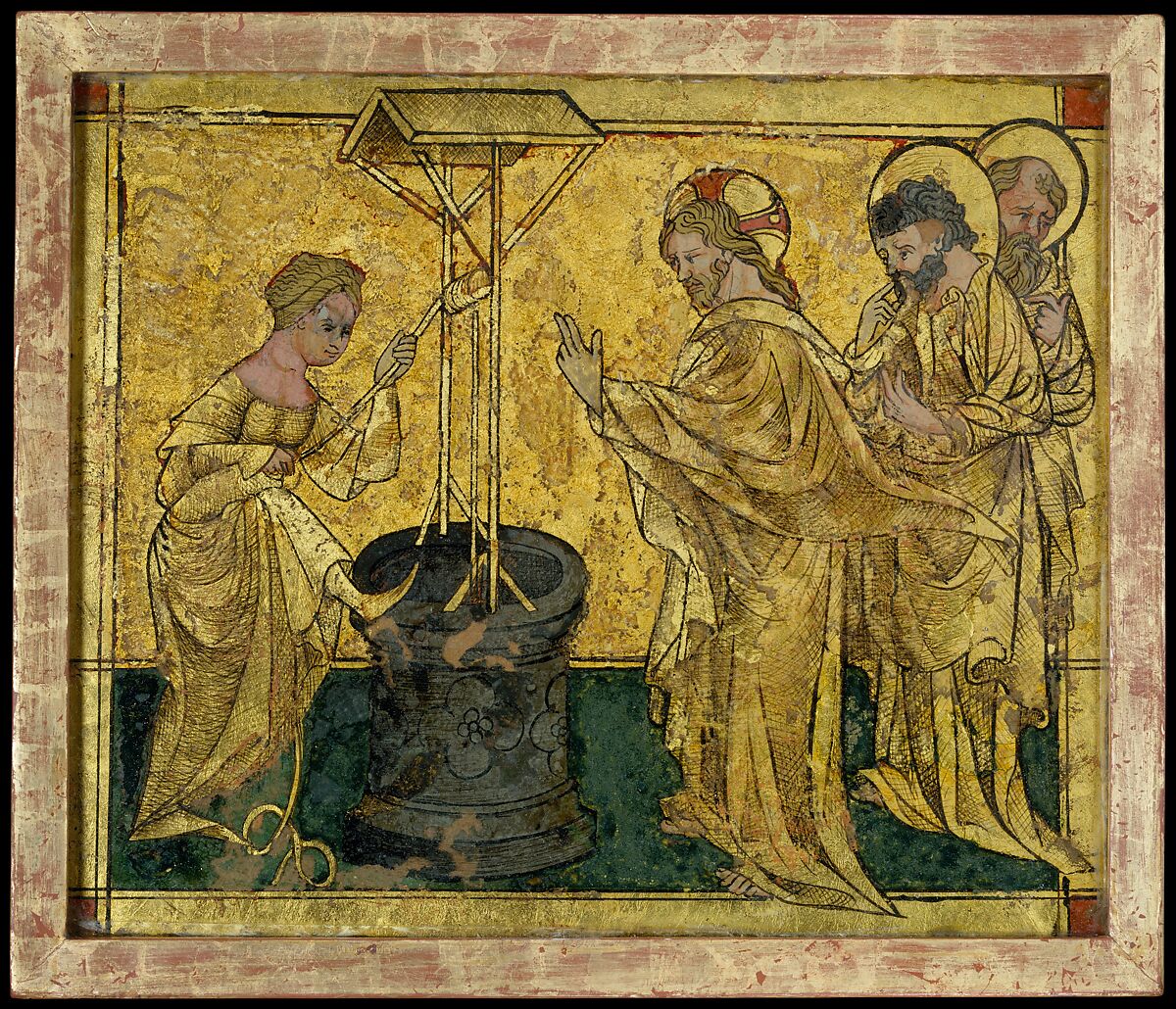
Southwest German (?)
ca. 1420
At times the Gospels tell us that Jesus knew people’s thoughts (Matt.12:25, Luke 5:22, Luke 6:8), but we also see occasions when Jesus’ seems to have limited knowledge. As a child, He “increased in wisdom and stature” like any other human (Luke 2:52). This alone implies he acquired great wisdom in the Scriptures through study, not through divine osmosis. Throughout the Gospels Jesus tries to find privacy, but is unable to do so (Mark 7:24). Isn’t Jesus supposed to know everything before it happens?
When in the midst of a crowd a sick person touches His clothing, He expresses curiosity as to who she is (Luke 8:45). Jesus explicitly denies any knowledge of the time of the Last Day (Mark 13:32). This verse has always been especially difficult to understand. If Jesus was God, how could He be ignorant of the time of His second coming?
This is the mystery of the divine/human nature of Christ. In the Gospels, we see frequent evidences of His humanity (He grew weary, suffered pain), but also many evidences of deity (His virgin birth, His resurrection and ascension, as well as His perfect words and deeds). Still, shouldn’t Jesus of Nazareth have known all of the answers?


 The Other Six Days